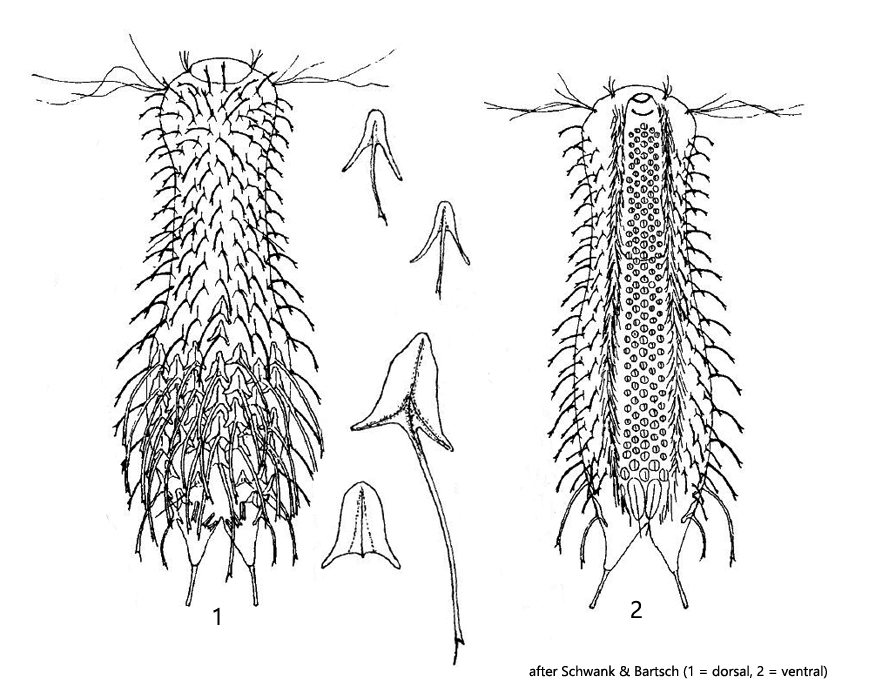
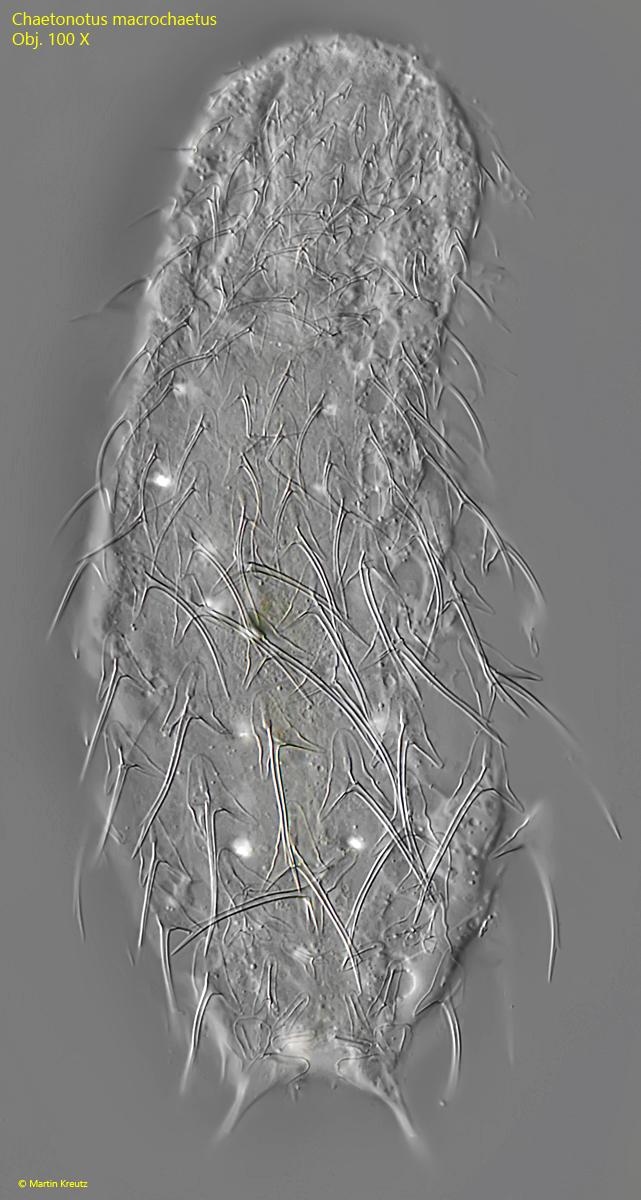
head rounded, cephalion and pleurae weakly developed
posterior tufts of cilia very long, anterior tufts of cilia very short
hypostomium present
furca short, tubes reaching half toe length
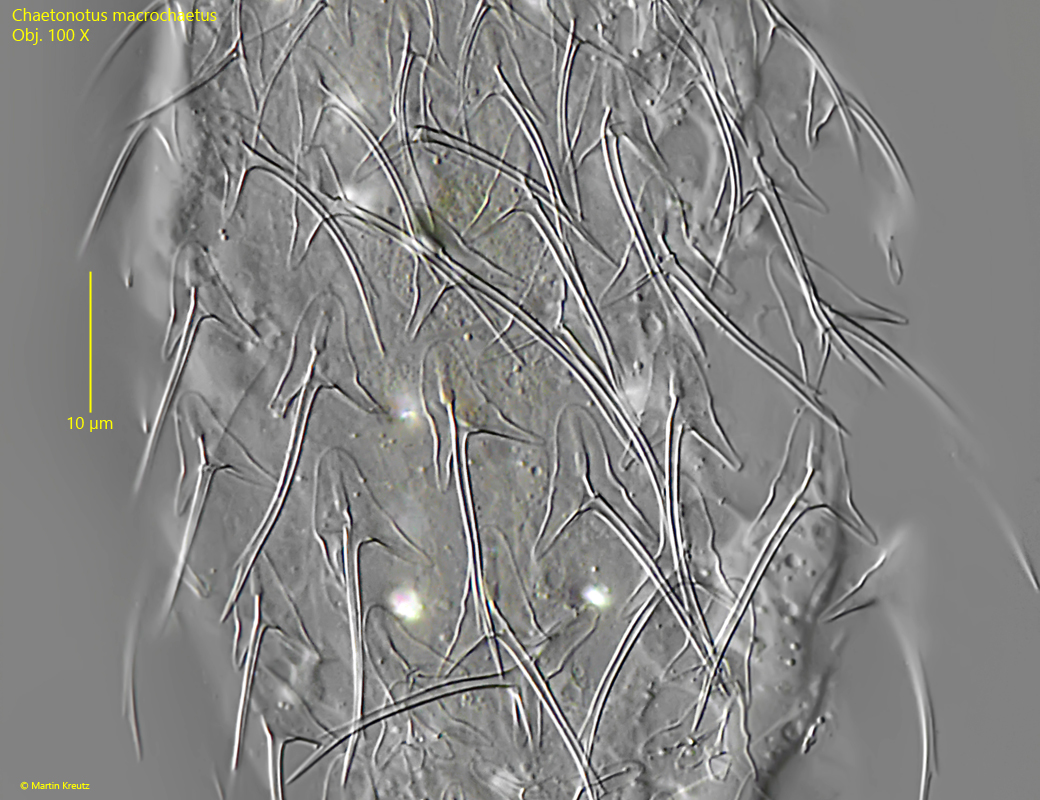
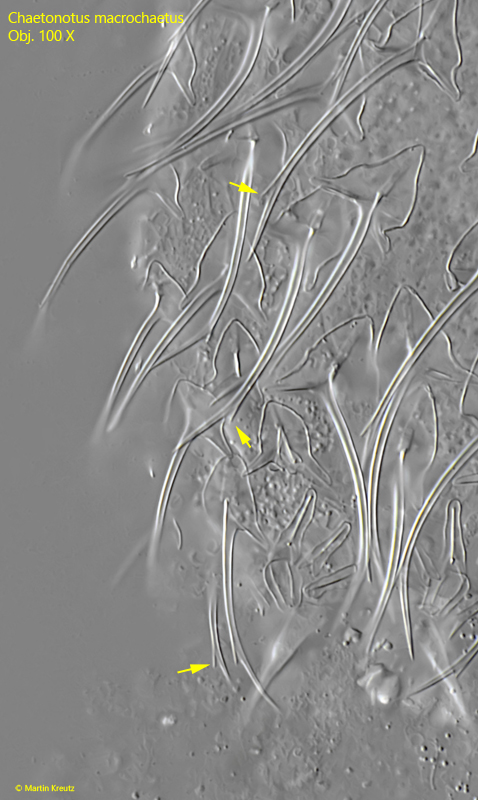
dorsal scales trilobed bearing spines with a secondary tip
dorsally 9 longitudinal and 13–17 transverse rows of scales
dorsal spines in posterior half rigid and long
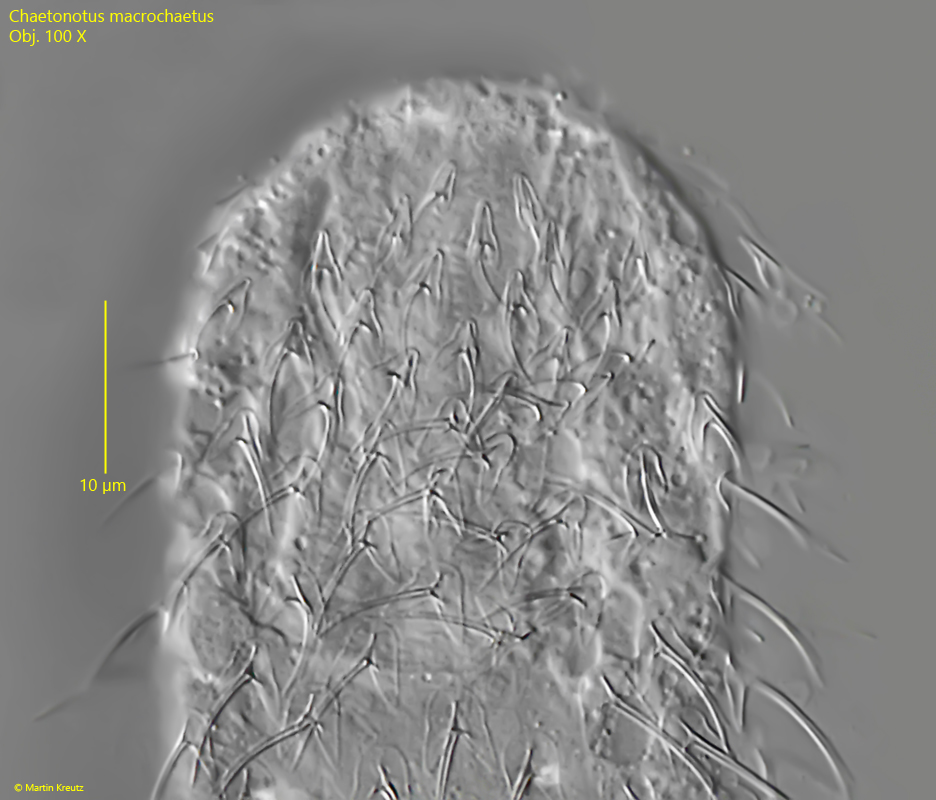
dorsal scales of head and neck with long wings
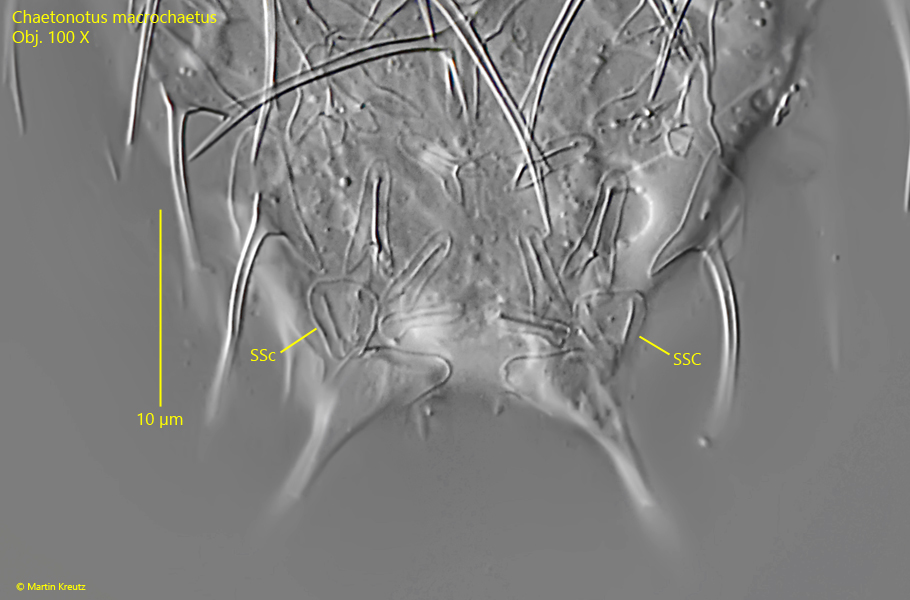
dorsal scales at posterior end smaller and keeled
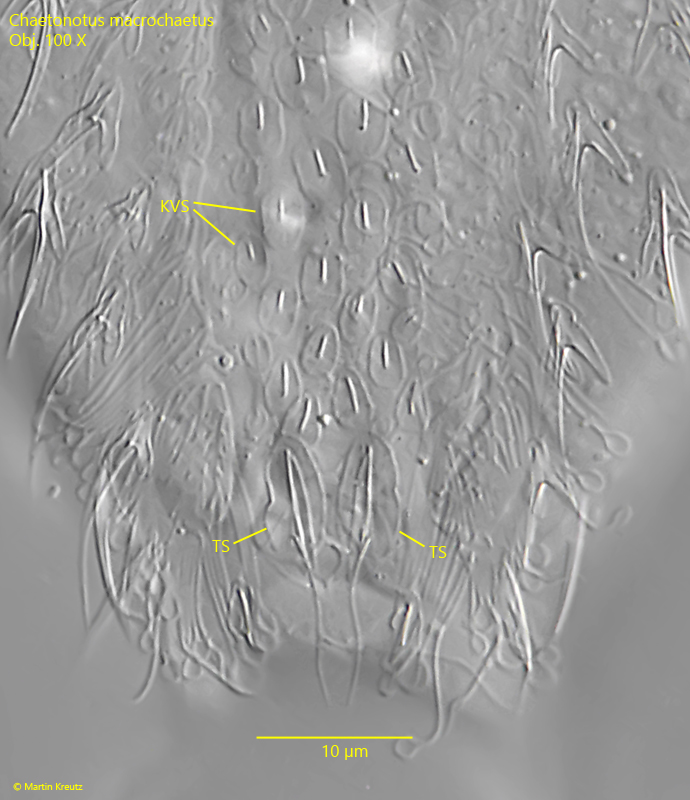
ventrally 5 rows of disc-shaped, keeled scales, two elongated terminal scales with keel
Chaetonotus macrochaetus
I frequently and regularly find Chaetonotus macrochaetus in the Purren pond and the Simmelried. The specimens are found mainly in the mud layer, but also in decomposing plant matter. The species is quite characteristic due to its long and thick spines, which bear a small secondary tip (s. fig. 7). The scales are trilobed and approximately 10 µm long in the middle of the body (s. fig. 6). All dorsal scales bear a spine, except for a field of small, keeled scales at the posterior end (s. fig. 8). On the ventral side there are small, keeled scales and two elongated terminal scales, which are also keeled (s. fig. 9). According to Schwank (1990), the ventral scales are supposed to be disc-shaped. In my specimens, however, they were more oval and also oblong in shape, with a length of 3–4 µm (s. fig. 9). As a further deviation, all specimens in my population were between 120–190 µm long and thus clearly above the range of 70–120 µm described by Schwank.
A very similar species is Chaetonotus persetosus. The distinguishing features from Chaetonotus macrochaetus appear to be only slight. The trunk spines are said to be shorter, and the ventral scales are supposed to be slightly hexagonal in shape and lack a keel. My specimens clearly possessed keeled ventral scales, which is why they must be Chaetonotus macrochaetus.
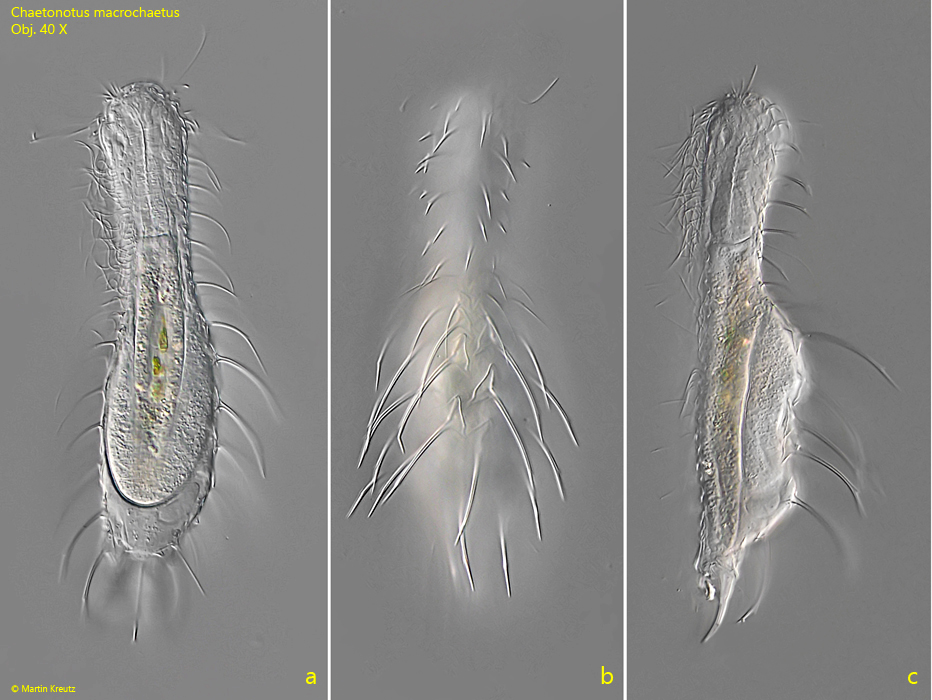
Fig. 1 a-c:Chaetonotus macrochaetus. L = 187 µm. A freely swimming specimen from dorsal (a, b) and laterally from left (c). Obj. 40 X.
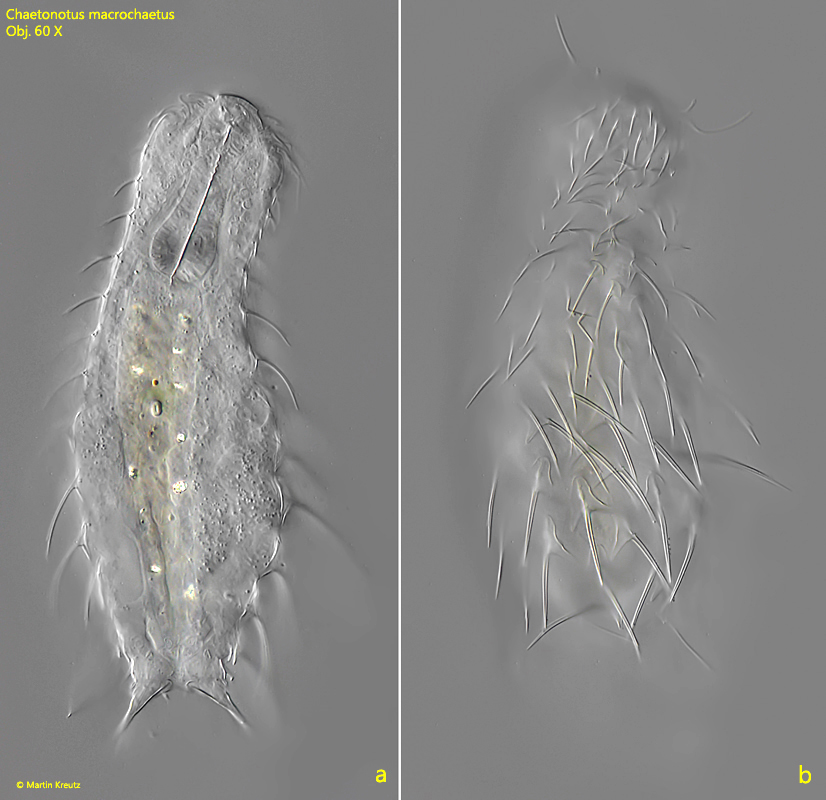
Fig. 2 a-b:Chaetonotus macrochaetus. L = 124 µm. Two focal planes from dorsal of a freely swimming specimen. Obj. 60 X.
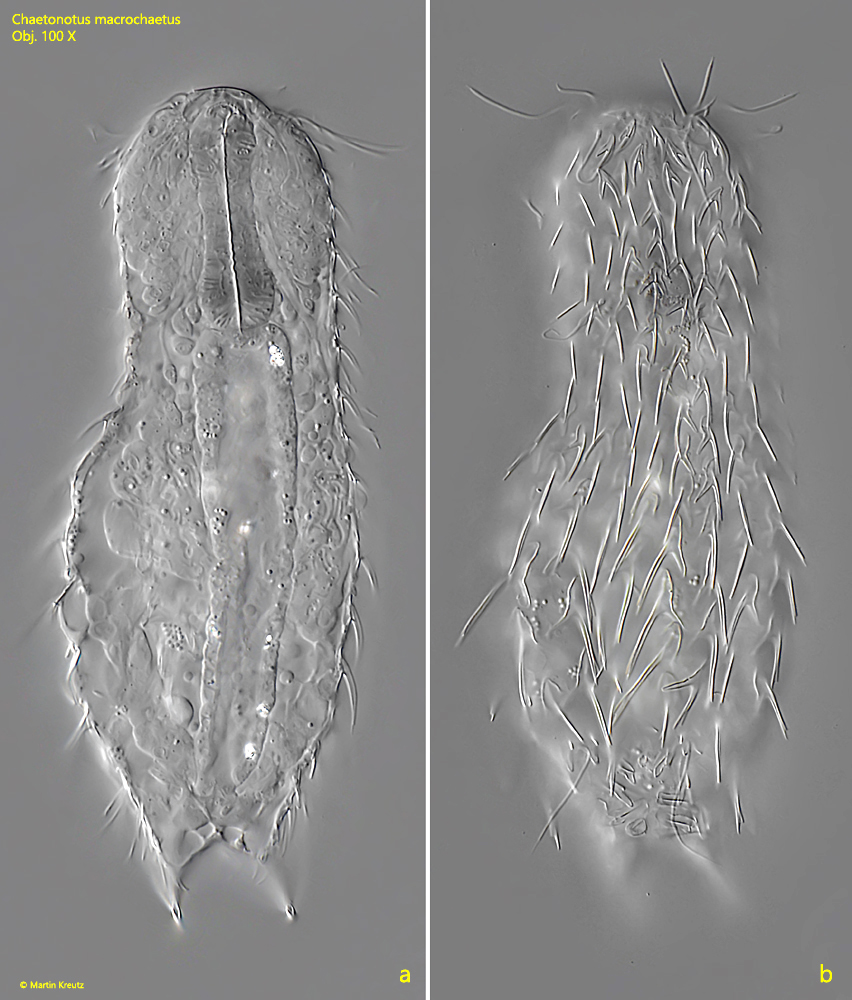
Fig. 3 a-b:Chaetonotus macrochaetus. L = 130 µm. Two focal planes of a slightly squashed specimen from dorsal. Obj. 100 X.
Fig. 4:Chaetonotus macrochaetus. Dorsal view of a strongly squashed specimen. Obj. 100 X.
Fig. 5:Chaetonotus macrochaetus. Detail of the dorsal scales in the head region. Obj. 100 X.
Fig. 6:Chaetonotus macrochaetus. Detail of the trilobed dorsal scales in mid-body. Obj. 100 X.
Fig. 7:Chaetonotus macrochaetus. Detail of the dorsal spines in mid-body with a distal secondary spine (arrows). Obj. 100 X.
Fig. 8:Chaetonotus macrochaetus. Detail of the dorsal scales at the posterior end. The two special scales (SSC) bearing the setolae are visible. Obj. 100 X.
Fig. 9:Chaetonotus macrochaetus. Detail of the ventral scales at the posterior end. The two elongated terminal scales (TS) are visible. The other keeled ventral scales (KVS) are oval shaped and oblong with a length of 3–4 µm. Obj. 100 X.