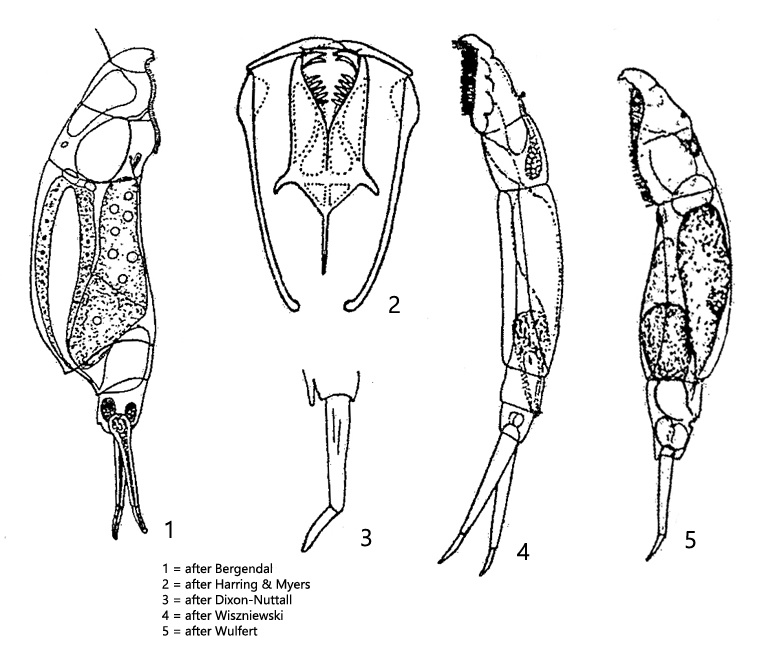
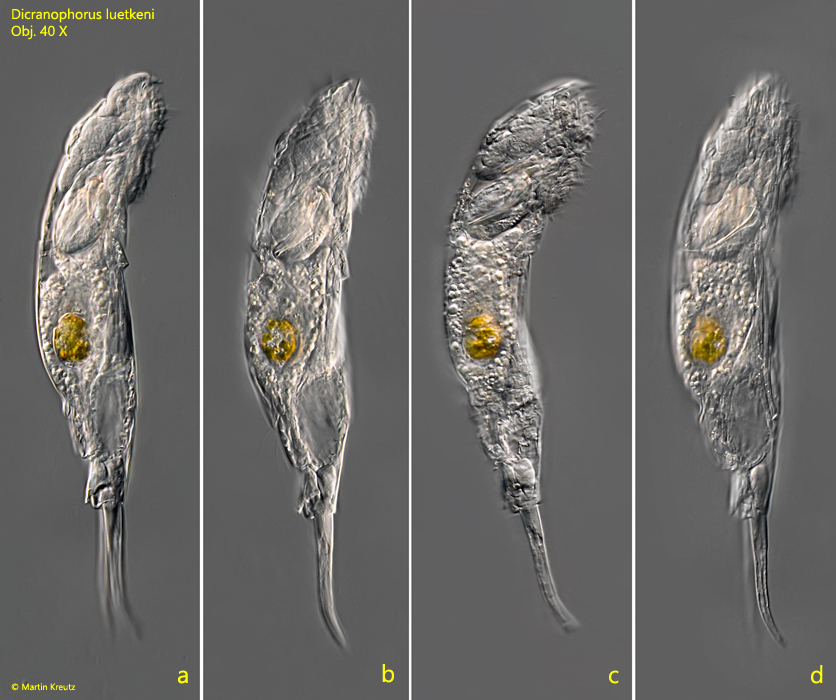
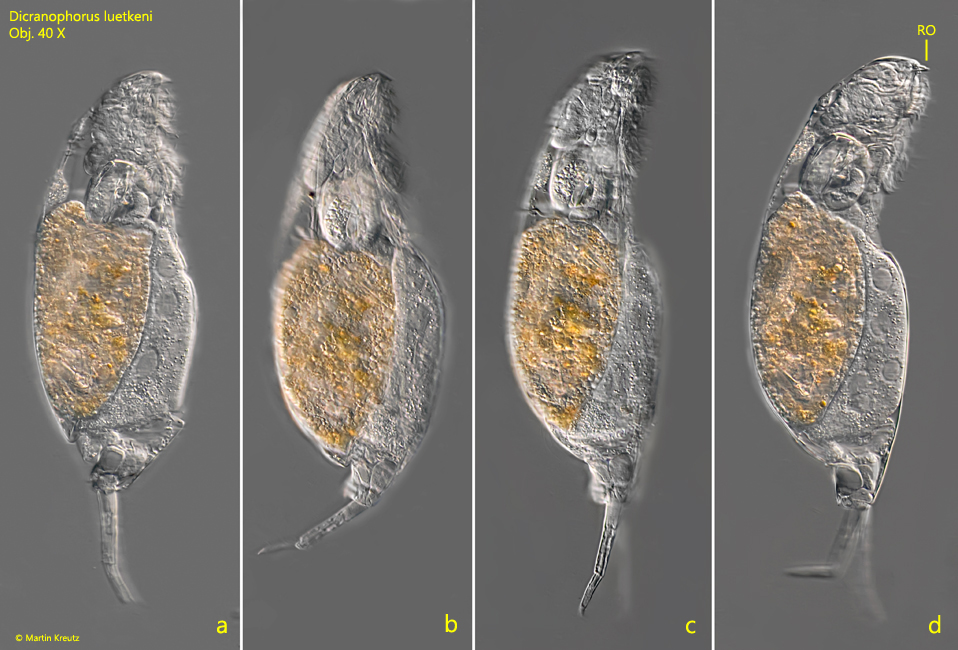
body slender, elongate and with straight ventral side
length 180–317 µm
corona ventral, a little shorter than head
large rostrum
with retrocerebral organ
no eyespot
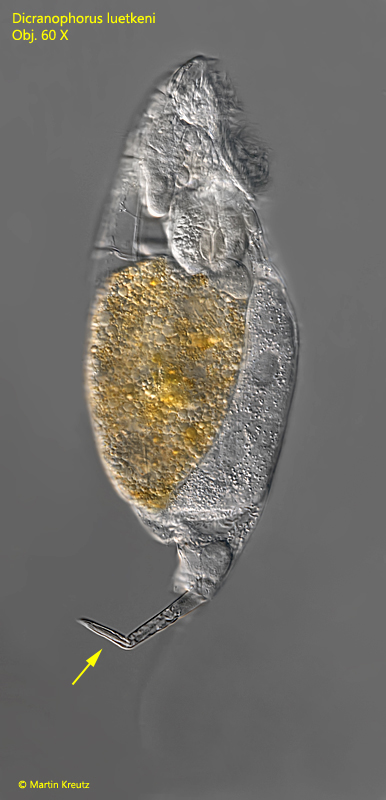
toes long, straight with slender, blunt claws
the claws can be bent
Dicranophorus luetkeni
I have found Dicranophorus luetkeni only rarely and exclusively in the Simmelried. The few finds are from October 2006, March 2008 and May 2010, after which I have not found any more specimens.
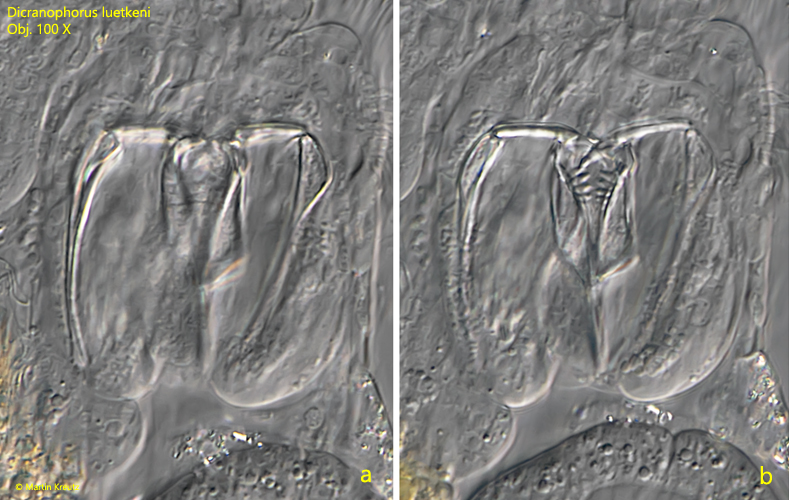
I recognize the species mainly by the long toes, whose claws can be bent (s. fig. 3). This can be observed especially in slightly squashed specimens. In addition, Dicranophorus luetkeni has an apical rostrum above the corona (s. fig. 2d). The corona is limited to the ventral side. The stomach is usually yellow or orange in color.