Trachelius ovum
(Ehrenberg, 1831) Ehrenberg, 1838
Most likely ID: n.a.
Synonyms: Amphileptus ovum, Amphileptus rotundus, Trachelius cicer, Trachelius leidyi, Trachelius subtilis, Trachelius vorax
Sampling location: Purren pond, Ulmisried, Simmelried
Phylogenetic tree: Trachelius ovum
Diagnosis:
- body sack-shaped, oval to almost spherical with short proboscis
- proposcis about a quarter to half of body length
- length 200–600 µm, width 75–350 µm
- ventrally a small groove
- cytoplasm strongly vacuolated, brownish or yellowish
- cytostome circular at the base of proboscis with long funnel
- macronucleus dumbbell-shaped, often broken in several parts
- several micronuclei
- many contracile vacuoles scattered throughout body
- extrusomes short, rod-shaped
- cortex thick with many ellipsoid granules
- 80-120 longitudinal rows of cilia
- dorsal brush with 3–4 rows, one row reach posterior end
Trachelius ovum is a large and conspicuous ciliate that I find in many of my sampling sites. In old samples, it often multiplies when peritrich ciliates settle on the surface and on the vessel wall, as Trachelius ovum particularly likes to phagozytise these.
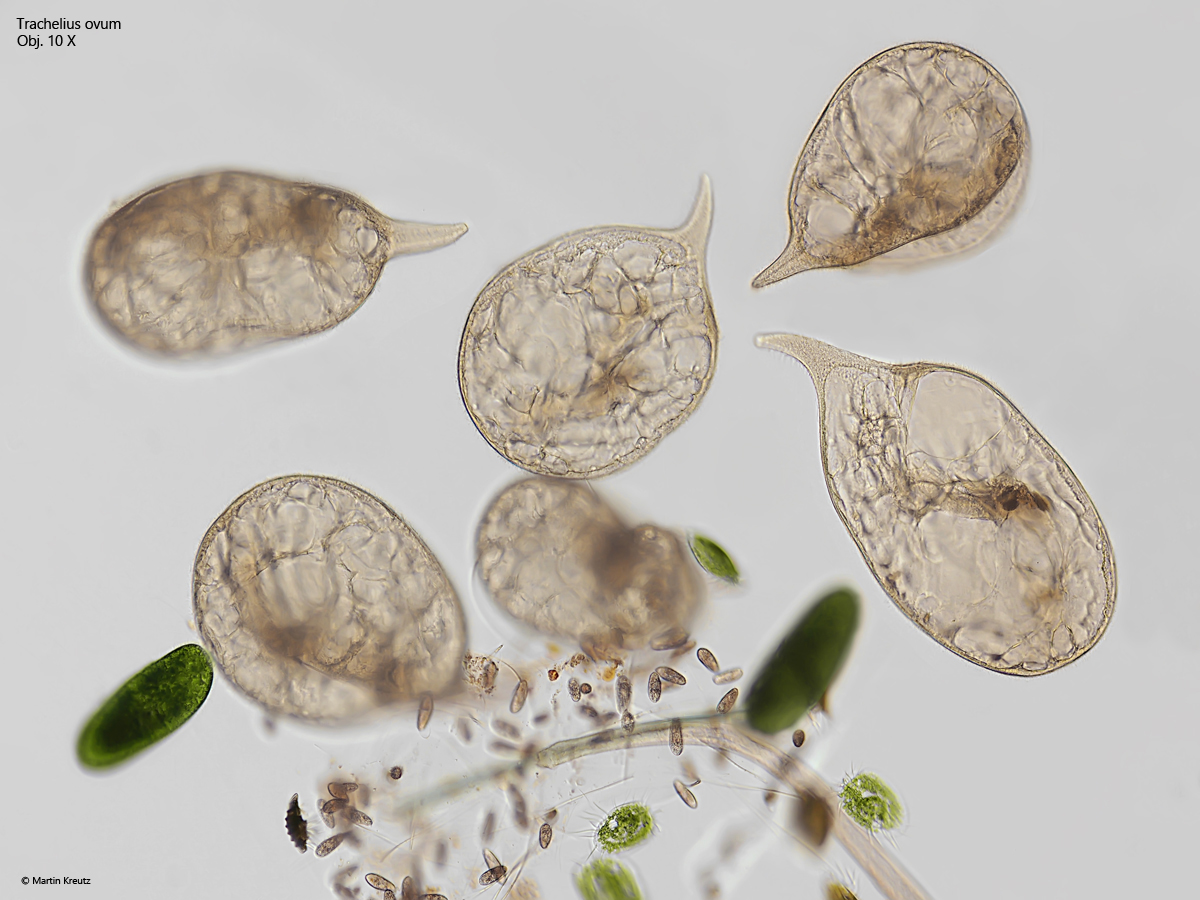
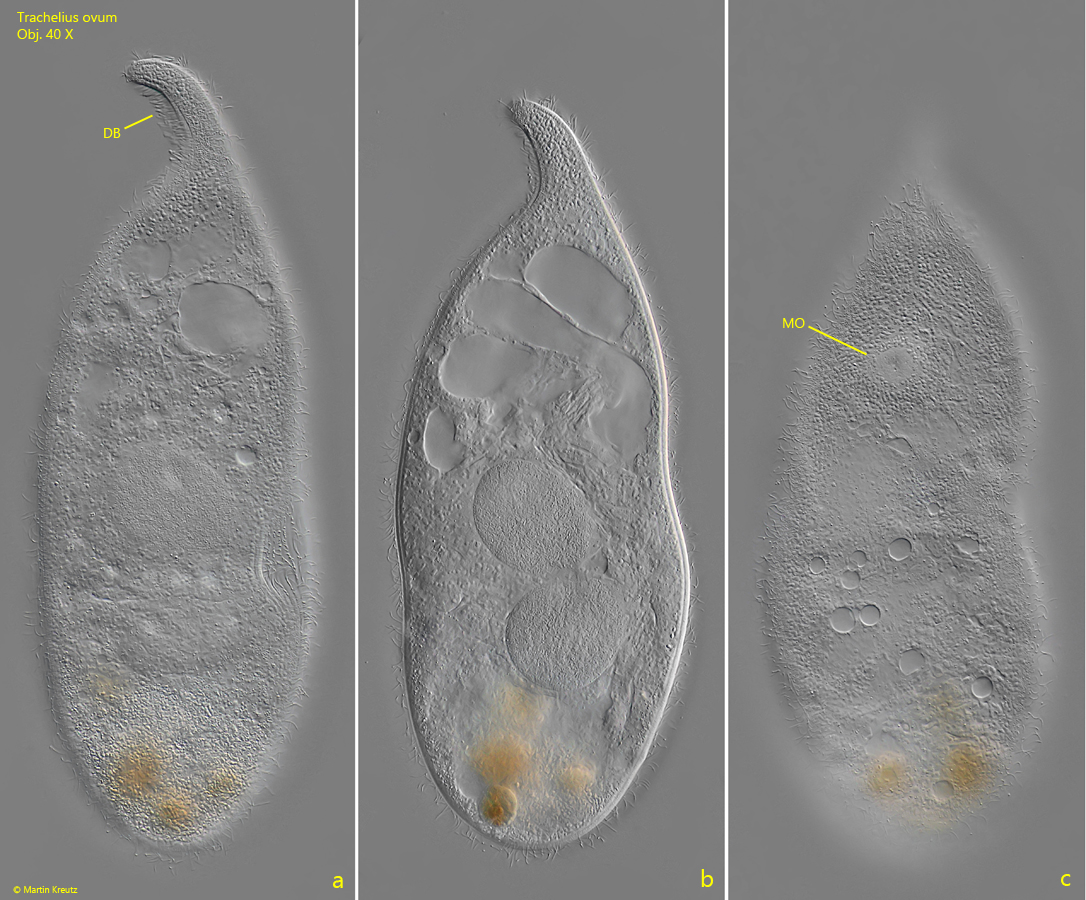
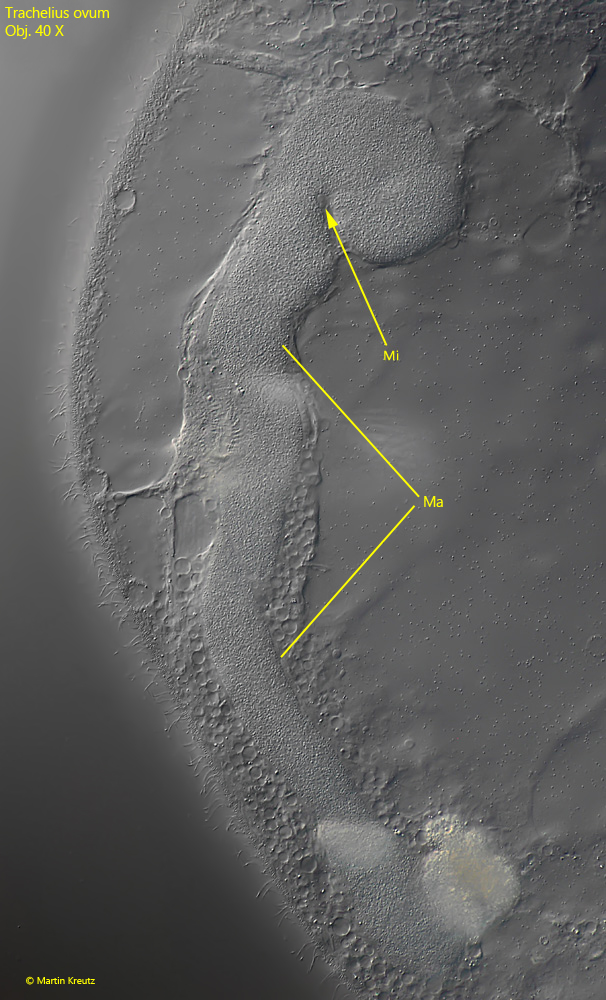
In brightfield illumination, the specimens mostly appear brown to brown-yellowish (s. fig. 1). The body shape is almost always plump and sack-shaped. In the specimens of my population, the proboscis was always quite short, about a quarter of the body length. The cytoplasm of Trachelius ovum is always strongly vacuolated, and in unsquashed specimens, the macronucleus is difficult to recognize because it is embedded in brownish cytoplasm. The shape of the macronucleus can vary greatly. Most often it is elongated and thread-like (s. fig. 6), but sometimes it is dumbbell-shaped or consists of several parts (s. fig. 3 b). The micronuclei are generally difficult to see and very small (s. fig. 6). There are supposed to be several.
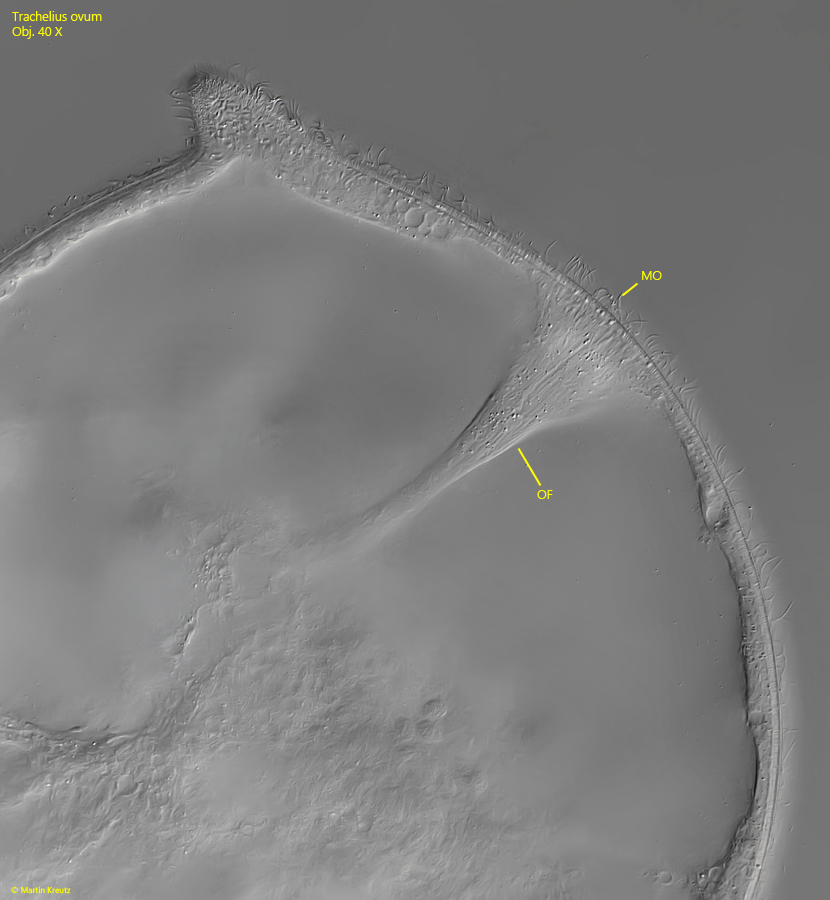
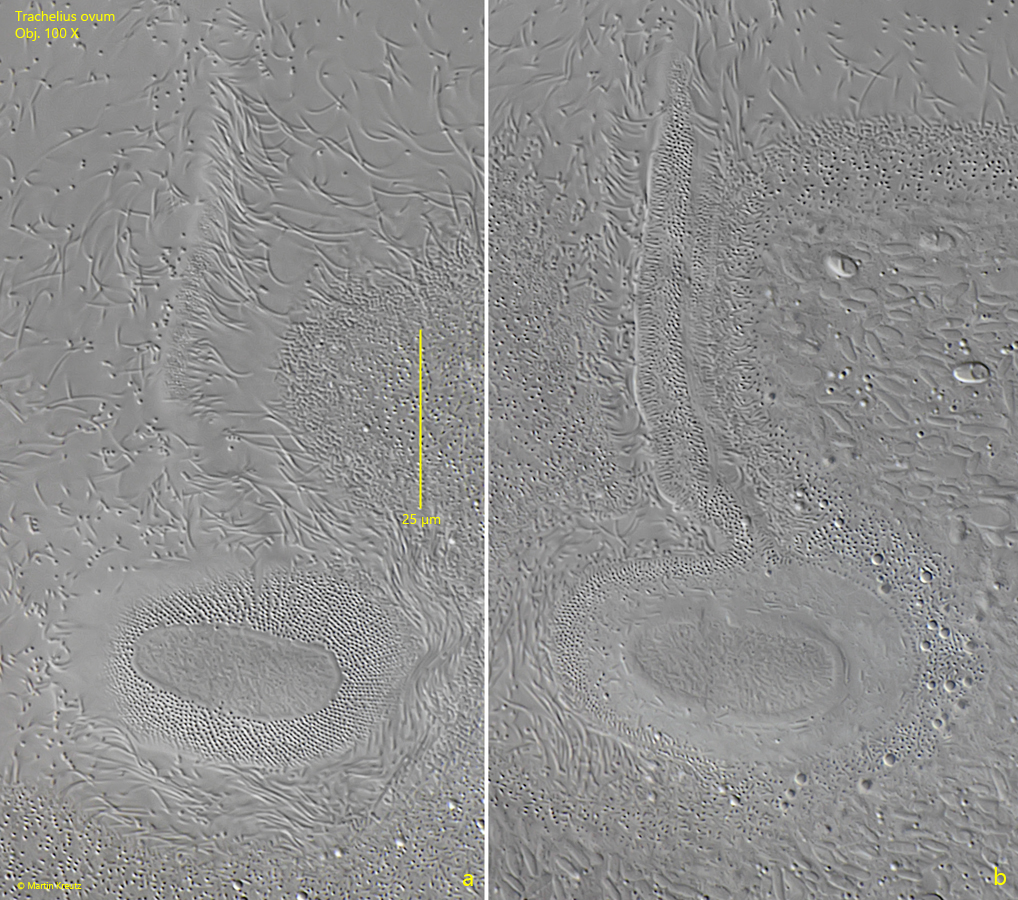
At the base of the proboscis lies the round or slightly elliptical mouth opening. It is surrounded by radially arranged rows of extrusomes, which extend upward in two parallel bands on the ventral side of the proboscis (s. fig. 7 a-b). Viewed laterally, the mouth opening is funnel-shaped, quickly narrowing and extending deep into the cytoplasm as a strand, similar to an esophagus (s. fig. 4).
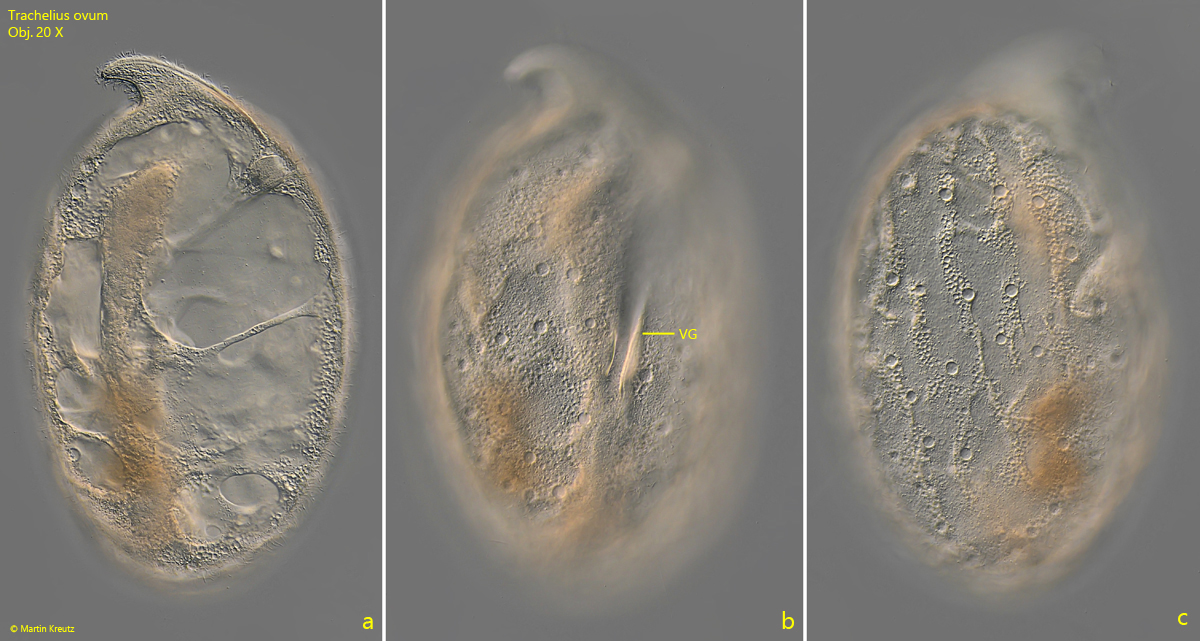
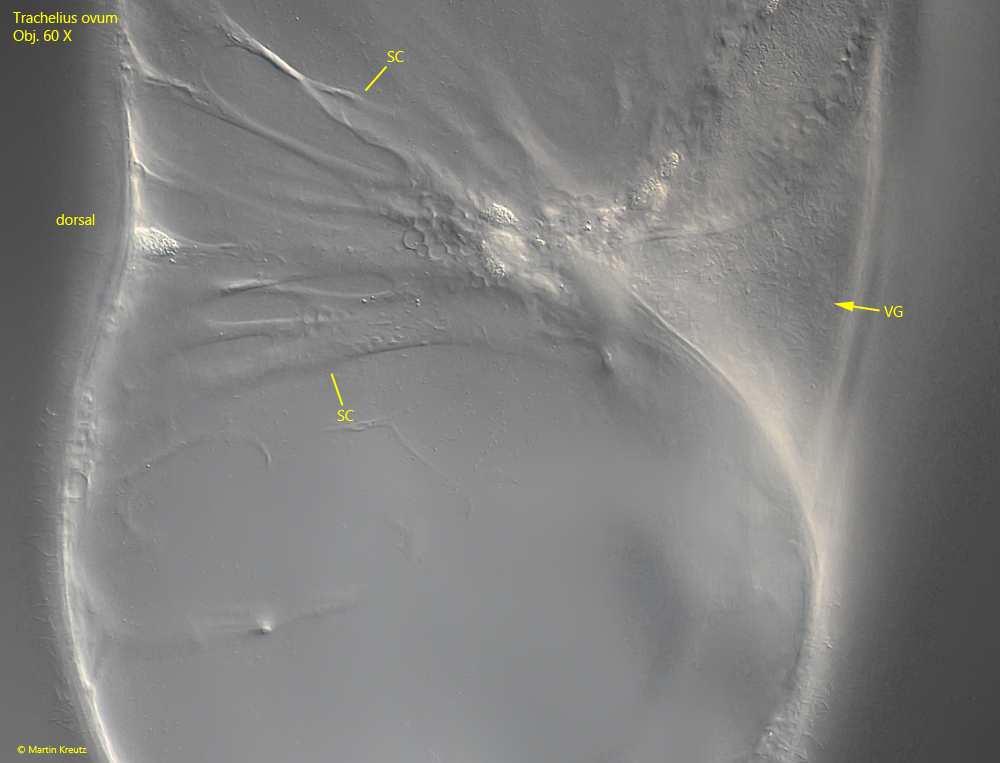
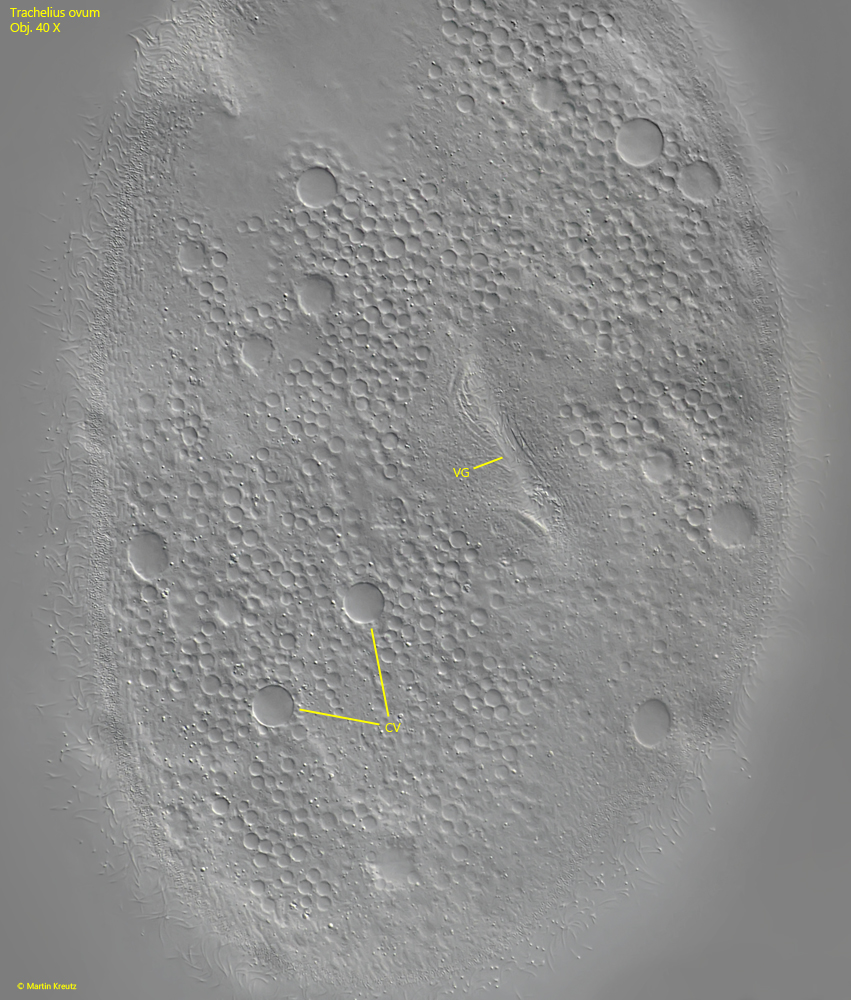
A unique feature of Trachelius ovum is a groove-shaped depression that is not entirely on the ventral side but is slightly shifted to the right side (s. fig. 2 b and 9). It is difficult to detect in freely swimming and rotating specimens. I was able to confirm the observation described by Kahl (1935) that the base of the groove is connected to the dorsal side by strands of cytoplasm, similar to muscle strands (s. fig. 5). The groove is formed and stabilized by the tension of the strands.
There are various theories about the function of this ventral groove. Hamburger (1903) is said to have observed specimens of Trachelius ovum clinging to the stalks of sessile peritrichs with the ventral groove and then detaching the zooids by rotating their bodies. However, this observation has not been confirmed by any other author since 1903. It is much more likely that the groove serves as a „fold for expansion.“ When Trachelius ovum has phagocytosed large amounts of prey, the strands of cytoplasm expand and the groove serves as a volume reserve. This was also suspected by Kahl.
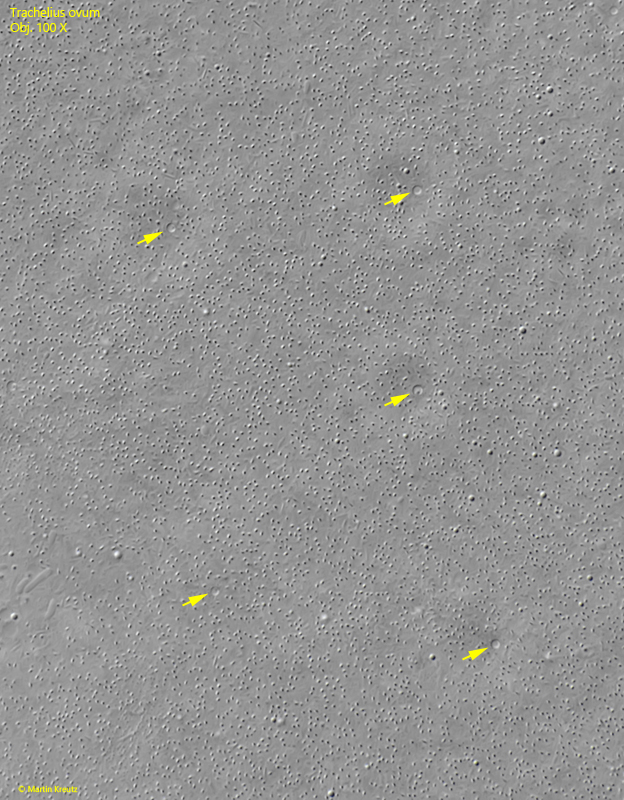
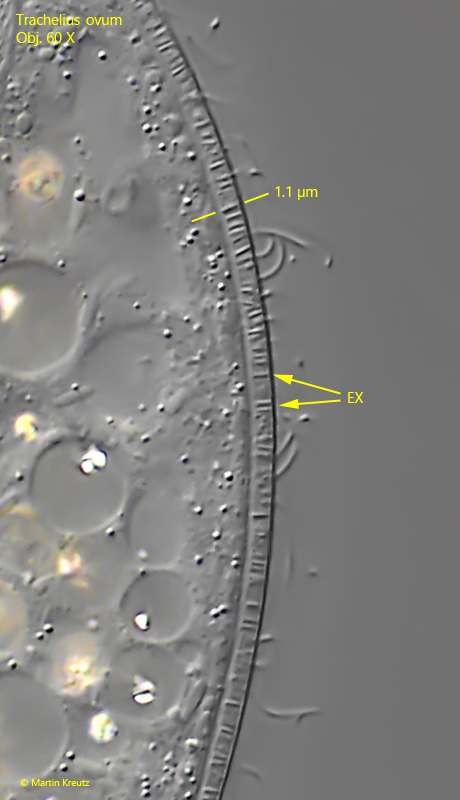
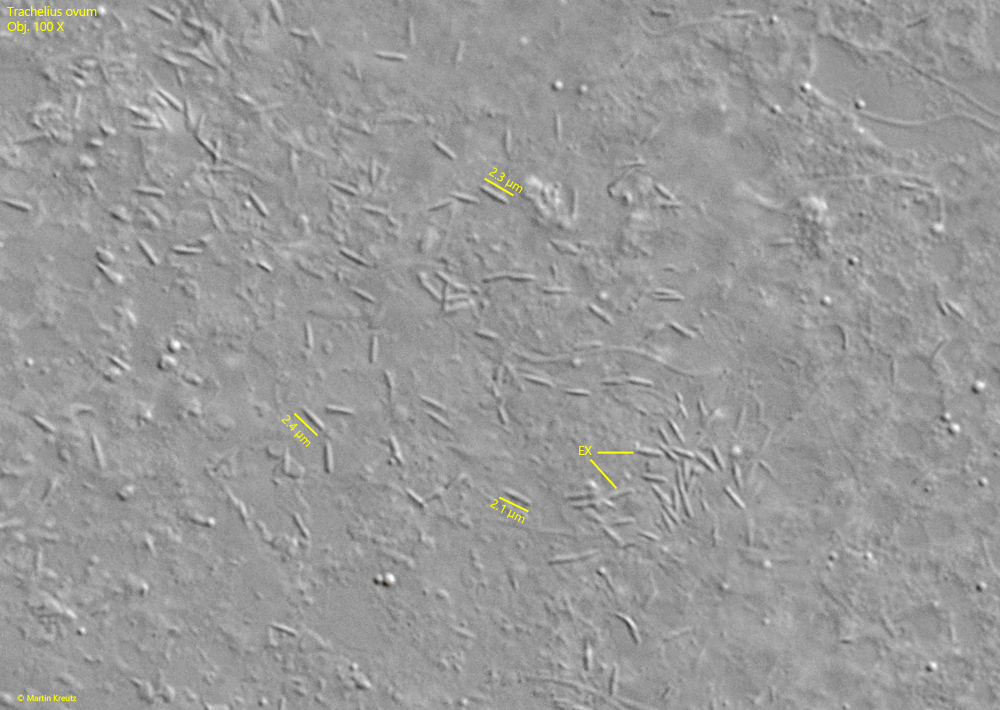
The body of Trachelius ovum is densely covered with very many contractile vacuoles (s. fig. 9). Each contractile vacuole has an excretory pore, which can also be clearly seen when focusing on the surface of the pellicle (s. fig. 10). The pellicle itself is quite thick and has a defined layer of short extrusomes about 1 µm long (s. fig. 11). They are different from the extrusomes located around the mouth opening and on the proboscis. According to my observations, these are also rod-shaped, but with slightly tapered ends and a length of 2-2.5 µm (s. fig. 12).
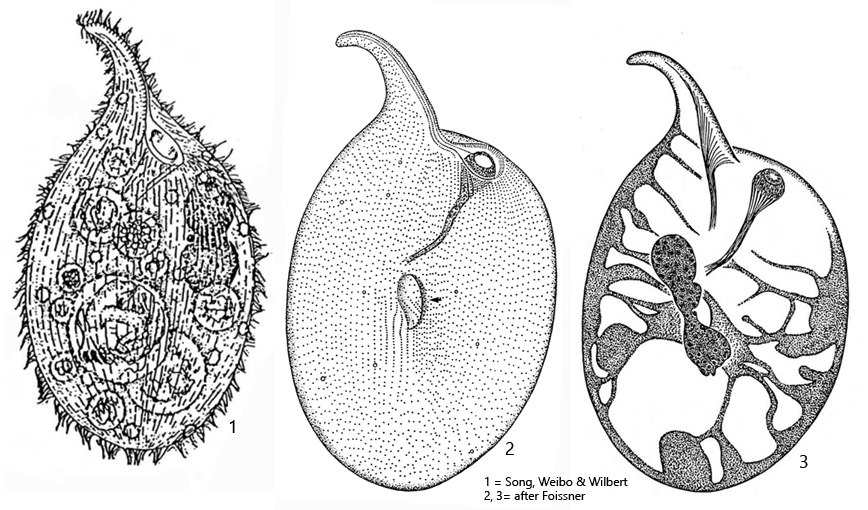
Fig. 1: Trachelius ovum. L = 455–650 µm. Some freely swimming specimen. Obj. 10 X.
Fig. 2 a-c: Trachelius ovum. L = 530 µm. A slightly squashed specimen from right (a, b) and from dorsal (c). Note the ventral groove (VG) shifted slightly to the right side. The whole body is covered with contractile vacuoles. Obj. 20 X.
Fig. 3 a-c: Trachelius ovum. L = 390 µm. A second specimen from right (a, b) and from ventral. On the ventral side the circular mouth opening (MO) is visible. DB = dorsal brush. Obj. 40 X.
Fig. 4: Trachelius ovum. Lateral view on the mouth opening (MO) and the oral funnel (OF) reaching deep into the vacuolized body. Obj. 40 X.
Fig. 5: Trachelius ovum. Lateral view from right. Several strands of cytoplasm (SC) form the ventral groove (VG). They are connected to the dorsal side and thus stabilize the groove. Obj. 60 X.
Fig. 6: Trachelius ovum. The elongated macronucleus (Ma) with a length of 430 µm in a slightly squshed specimen. One of the small micronuclei is also visible. Obj. 40 X.
Fig. 7 a-b: Trachelius ovum. Two focal planes of the mouth opening and the anterior rows of extrusomes on the ventral side of the proboscis. The mouth opening is also surrounded by radially arranged rows of extrusomes. Obj. 100 X.
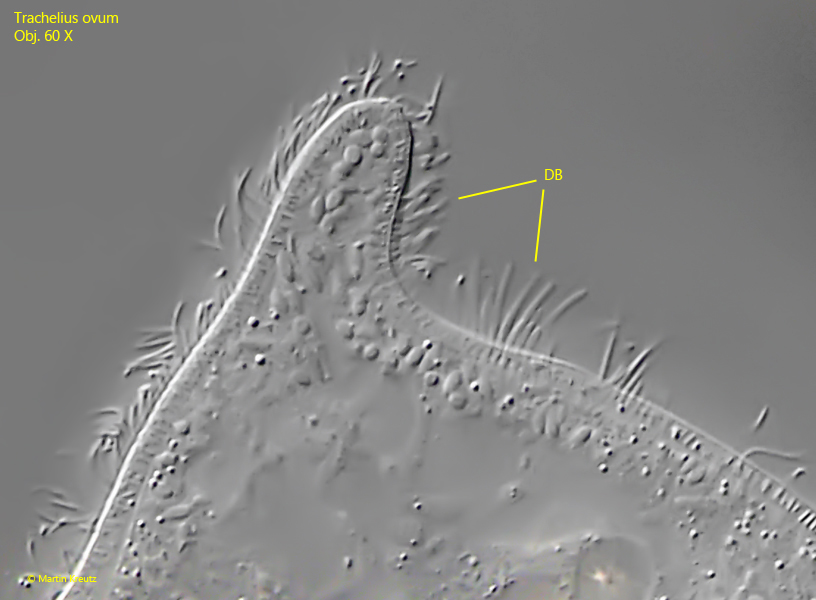
Fig. 8: Trachelius ovum. A part of the dorsal brush (DB) with elongated, club-shaped cilia. Obj. 60 X.
Fig. 9: Trachelius ovum. Some of the contractile vacuoles (CV) which are scattered throughout the body. They are located beneath the pellicle. VG = ventral groove. Obj. 40 X.
Fig. 10: Trachelius ovum. Focal plane on the surface of the pellicle. The excretion pores (arrows) of the contractile vacuoles are visible. Obj. 100 X.
Fig. 11: Trachelius ovum. Lateral view on the cortex with a layer of short, about 1 µm long extrusomes (EX). Obj. 60 X.
Fig. 12: Trachelius ovum. The extrusomes (EX) in the proboscis are rod-shaped with slightly tapered ends. They are 2–2.5 µm long. Obj. 100 X.
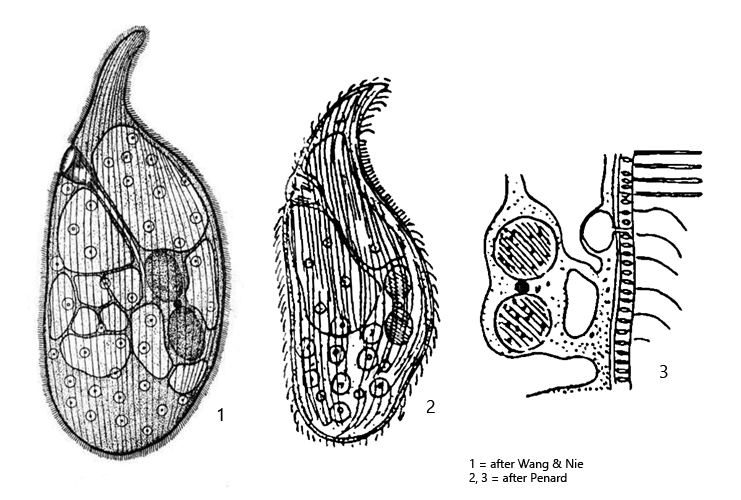
The species Trachelius subtilis was described by Penard in the year 1922. It is said to differ from Trachelius ovum by the following characteristics:
– a two-part macronucleus with a micronucleus in between
– approximately 12 contractile vacuoles are present
– a ventral groove is absent or very weak
– length up to 280 µm
– brown-colored vacuoles in the posterior third
Here are the drawings of Trachelius subtilis by Kahl and Penard:
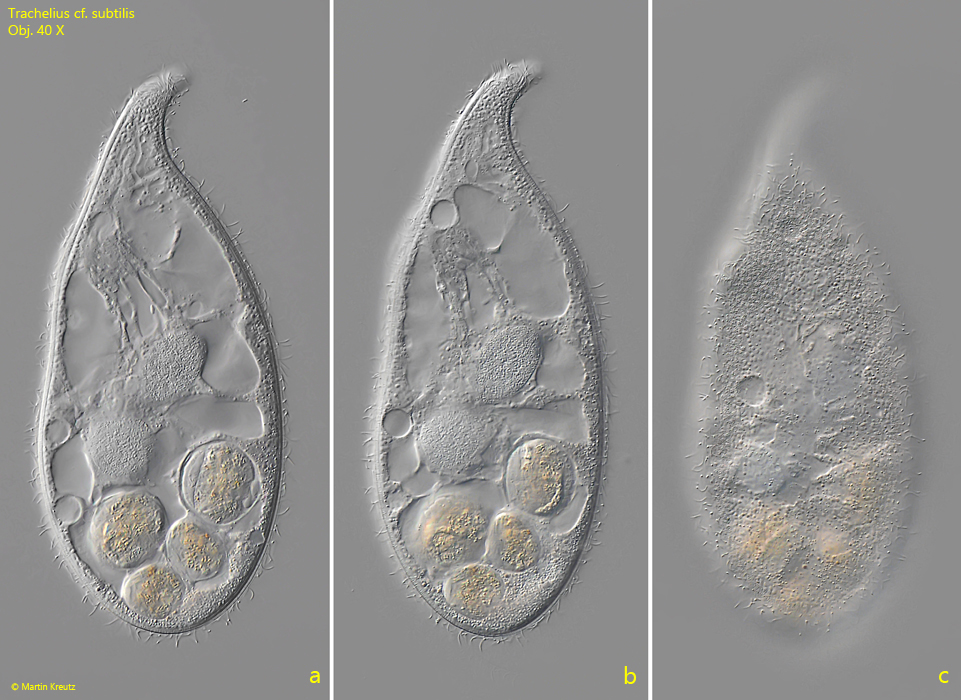
In June 2021, August 2022, and July 2025, I found specimens of Trachelius among aquatic plants in the Simmelried, which exhibited at least some of the characteristics described by Penard and Kahl for Trachelius subtilis.
Although Trachelius subtilis was synonymized with Trachelius ovum by Vďačný & Foissner in 2012, as there were not enough observations to justify distinguishing it as Trachelius subtilis, I would like to show here the recordings I made of the specimens that resemble Trachelius subtilis.
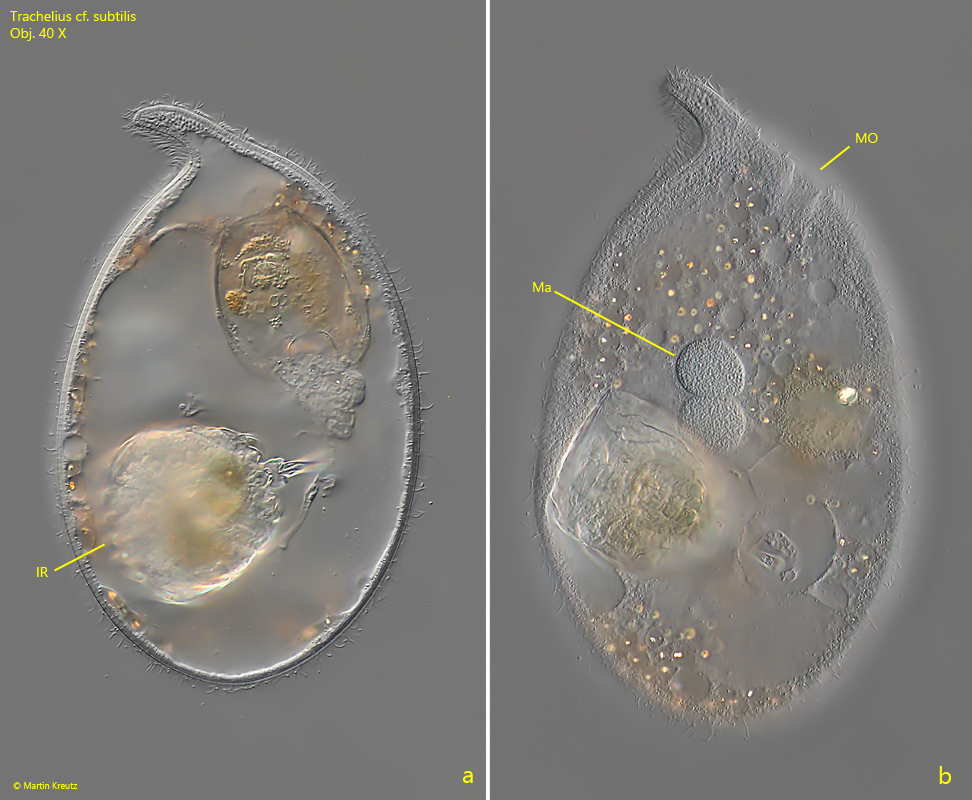
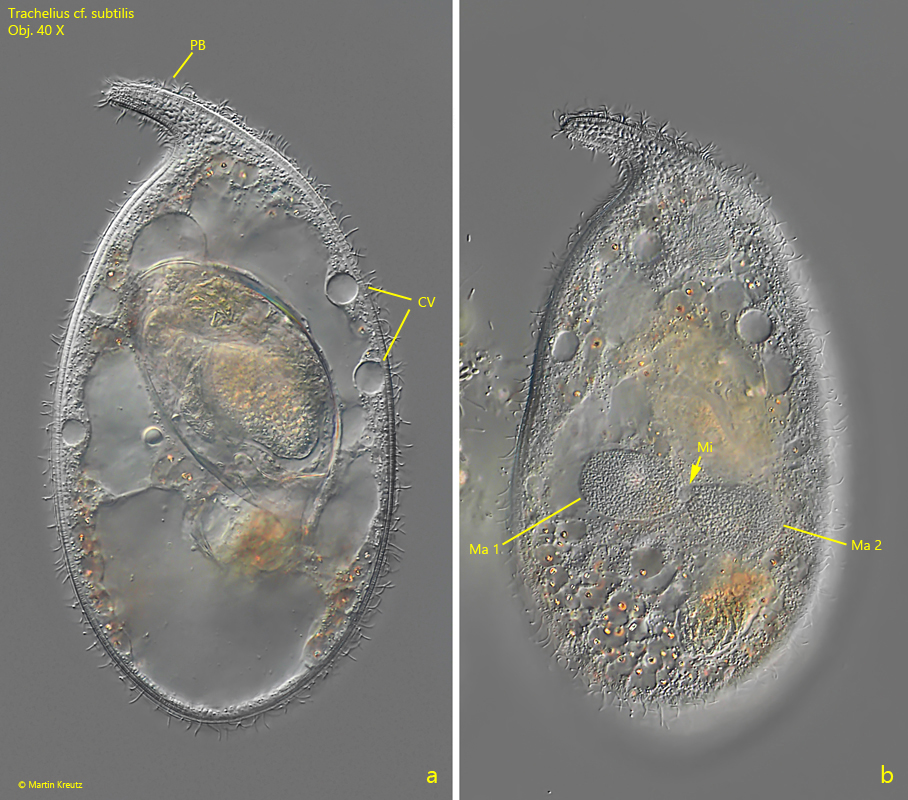
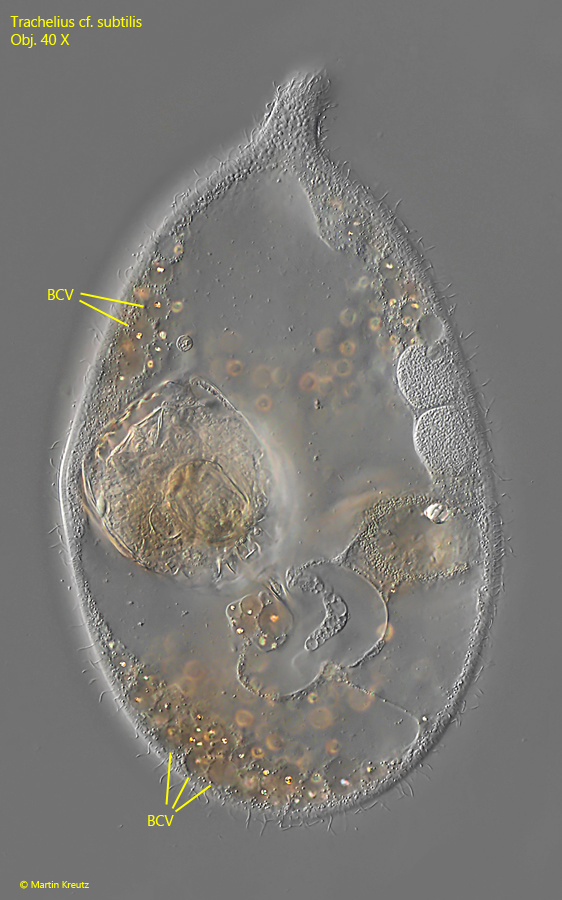
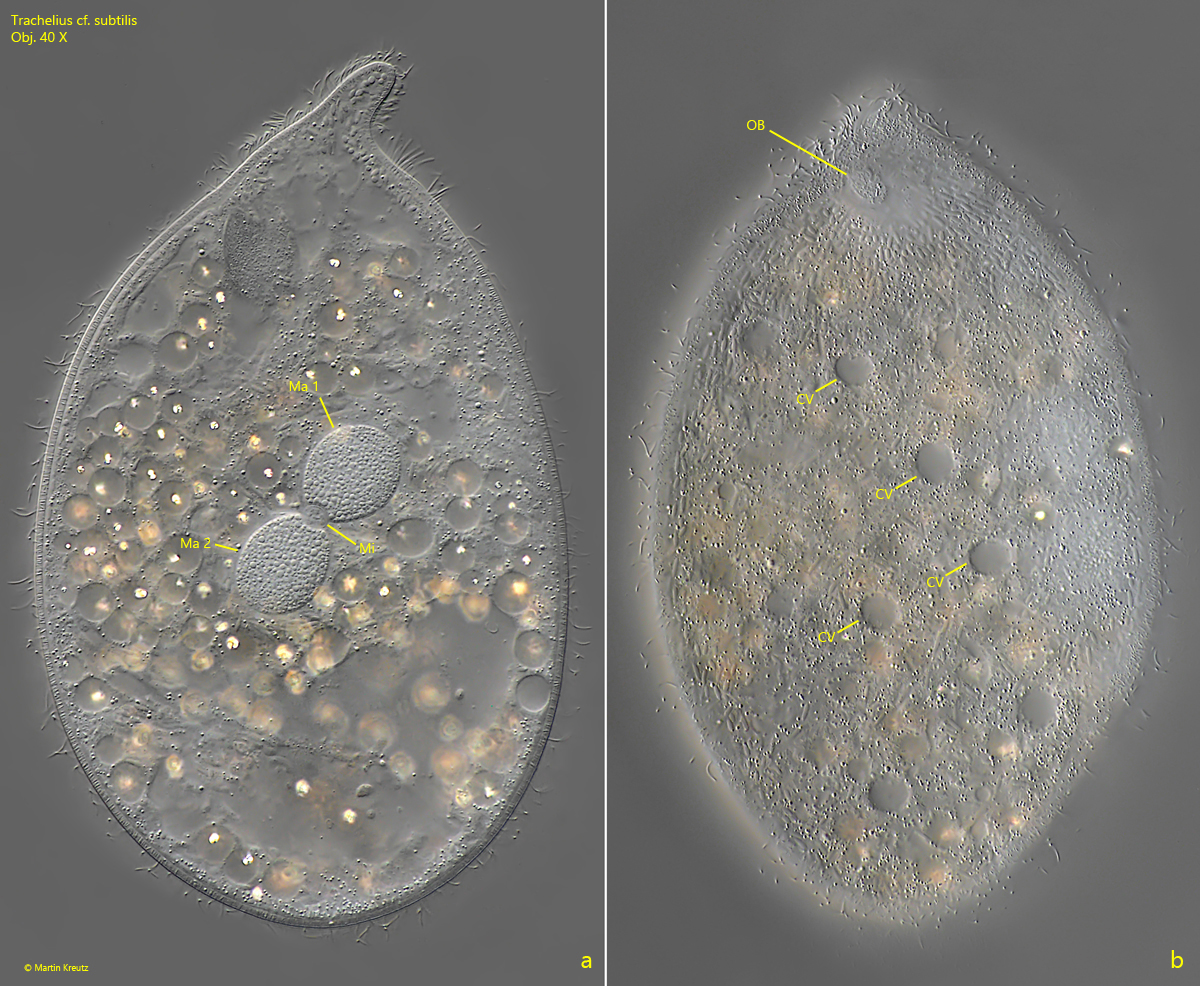
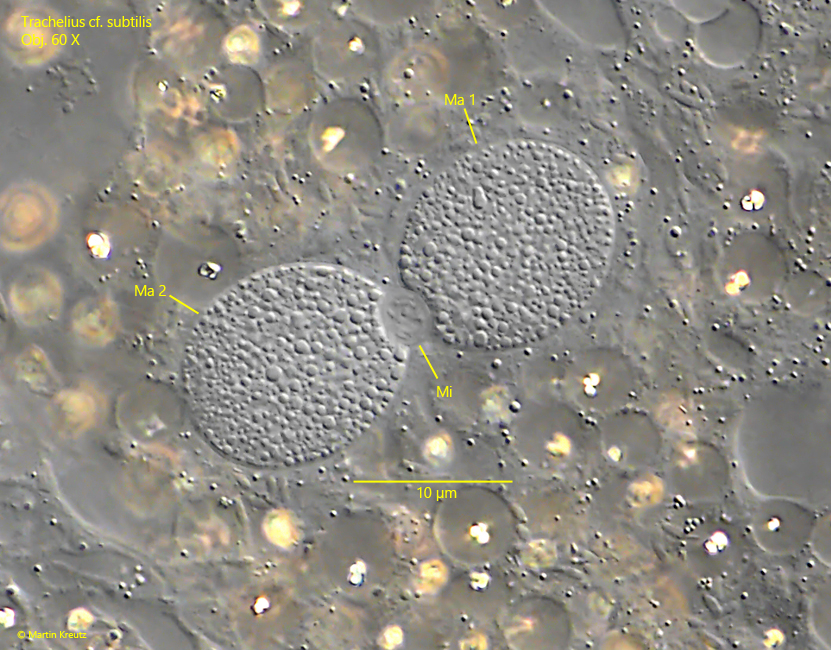
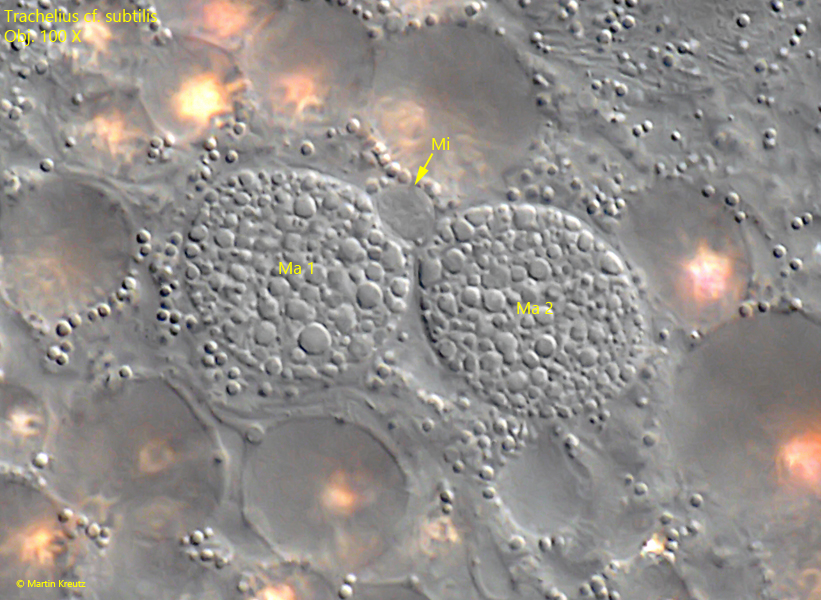
The specimens I found were smaller than Trachelius ovum, with a maximum length of 250 µm. The specimens were also more slender than Trachelius ovum. The proboscis was short and bent backward. The very large food vacuoles mainly contained rotifers, which was also described by Kahl. The macronucleus in all specimens I examined consisted of two oval parts with a length of about 12–15 µm. Between these two macronuclei a spherical micronucleus with a diameter of approximately 2-3 µm was located (s. figs. 16 a and 17). The two macronuclei were definitely separate. Thus, they correspond exactly to the description and drawing by Penard (s. drawing 3, above). The cytostome was circular and had a diameter of 8–10 µm. In the cytoplasm of some specimens, a large number of brownish-colored vacuoles were found, which were also described by Kahl (s. fig. 15). In the pellicle, there is a fringe of rod-shaped extrusomes about 1 µm in length. I could not find longer extrusomes in the cytoplasm. Numerous contractile vacuoles were scattered over the body, but there seemed to be fewer than in Trachelius ovum (s. fig. 16 b).
In particular, the nuclear apparatus corresponds exactly to the descriptions and drawings of Penard. The findings of these specimens at least prove that there are forms of Trachelius which correspond to the descriptions of Penard and Kahl for Trachelius subtilis. However, in order to define and separate Trachelius subtilis as its own species, further studies by other authors and possibly genetic analyses are still required.
Fig. 13 a-b: Trachelius cf. subtilis. L = 230 µm. A freely swimming specimen. IR = ingested rotifer, Ma = macronucleus consisting of two parts. Obj. 40 X.
Fig. 14 a-b: Trachelius cf. subtilis. L = 218 µm. A second freely swimming specimen. Note the two oval macronuclei (Ma 1, Ma 2) with the spherical micronucleus (Mi) in between. CV = contractile vacuoles, PB = proboscis. Obj. 40 X.
Fig. 15: Trachelius cf. subtilis. The brownish colored excretion vacuoles (BCV) in the slightly squashed specimen as shown in fig. 1 a-b. Obj. 60 X.
Fig. 16 a-b: Trachelius cf. subtilis. L = 200 µm. Two focal planes of a slightly squashed specimen. CV = contractile vacuole; Ma 1, Ma 2 =macronuclei; Mi = micronucleus; OB = oral bulge. Obj. 60 X.
Fig. 17: Trachelius cf. subtilis. The nuclear apparatus of the specimen as shown in fig. 14 a-b in detail. Ma 1, Ma 2 = macronuclei; Mi = micronucleus. Obj. 60 X.