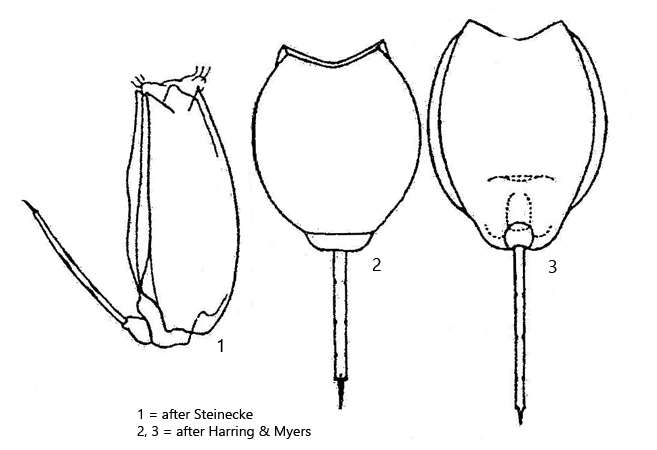
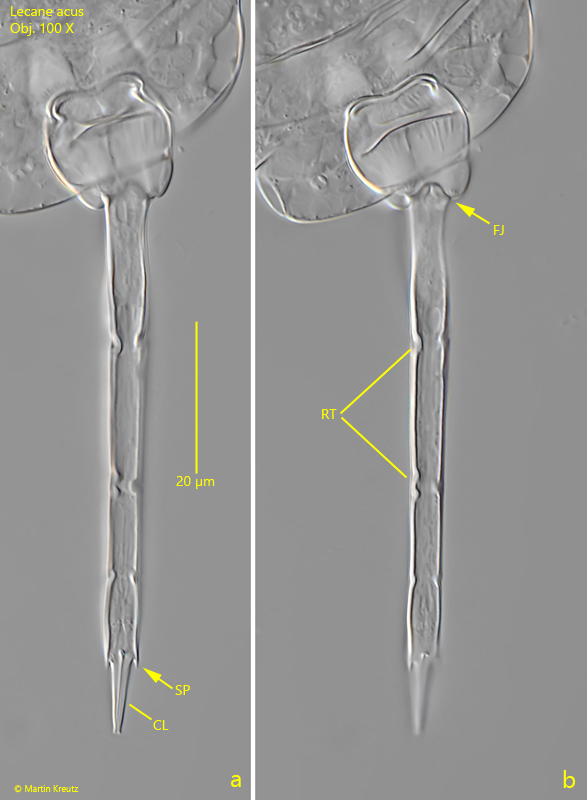
toes very long (58–92 µm) with ring-shaped thickenings
toes with flexible joint
claw with separation groove and secondary points
one eyespot
Lecane acus
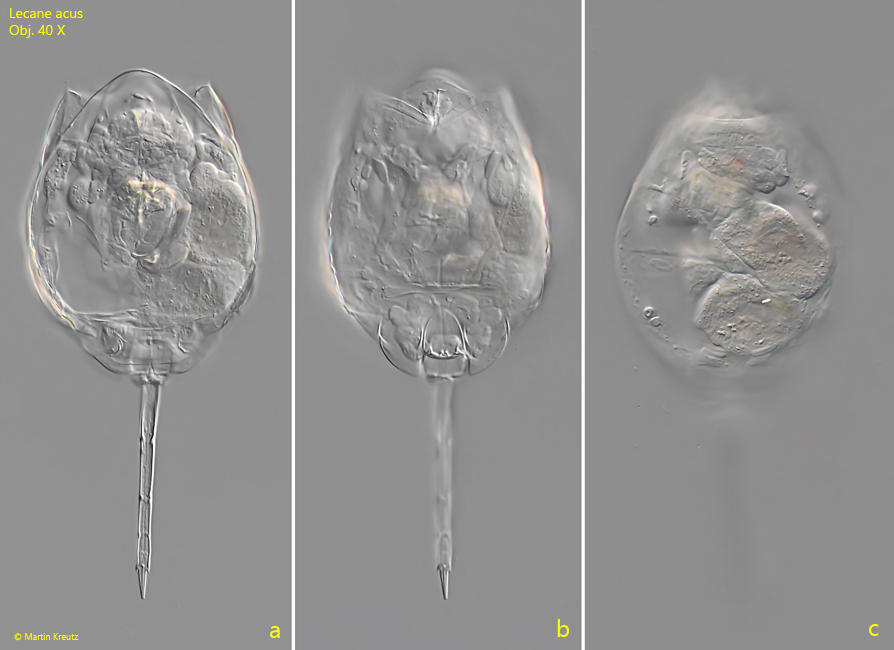
So far, I have only found a few specimens of Lecane acus in a sample from the Lauchsee Moor in Austria. This species has exceptionally long toes, which make up almost half of the body length. The toes are fused into a tube, which has three ring-shaped thickenings on its inner side (s. fig. 3 a-b). The claws are also fused and only have a faint groove. The toes are connected to the foot by a movable joint, which allows Lecane acus to bend the toes towards the ventral side.
Fig. 1 a-c:Lecane acus. L = 180 µm (with toes). A contracted specimen from ventral (a, b) and from dorsal (c). Obj. 40 X.
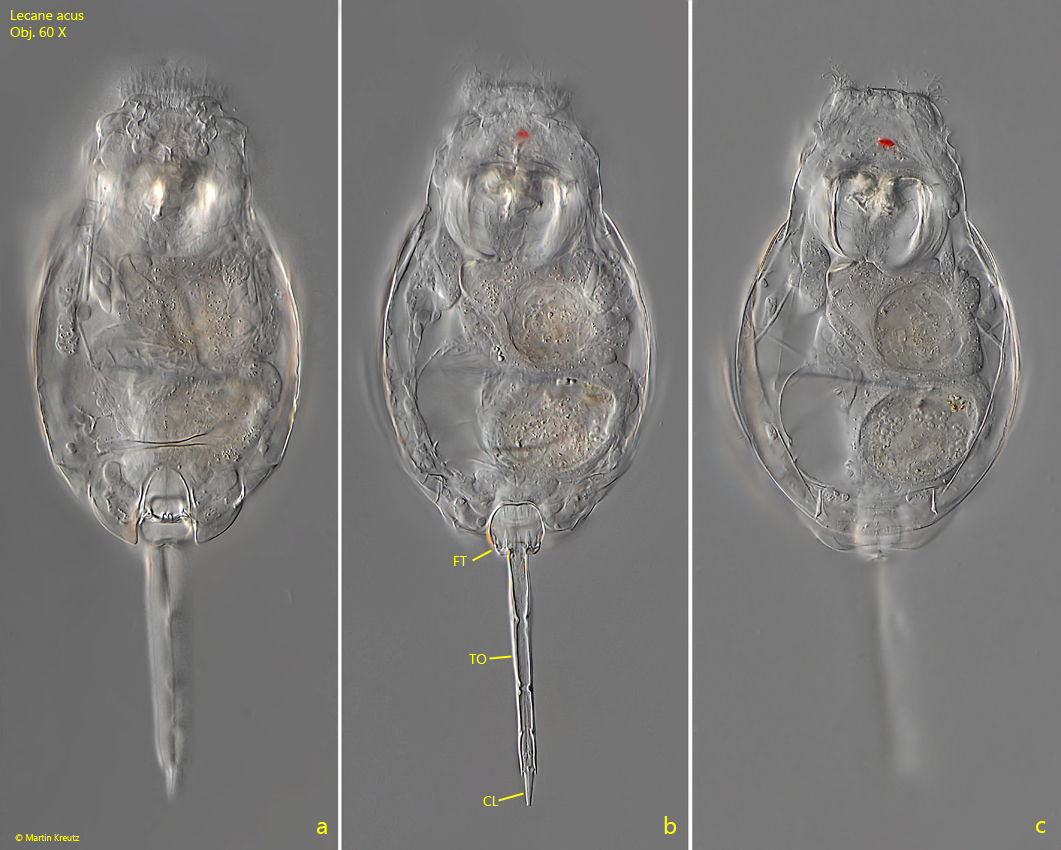
Fig. 2 a-c:Lecane acus. L = 180 µm (with toes). A slightly squashed specimen as shown in fig. 1 a-c from ventral. FT = foot, TO = toes, CL = claws. Obj. 60 X.
Fig. 3 a-b:Lecane acus. The long toes are fused to a tube with ring-shaped thickenings (RT) inside. The claws (CL) have small secondary points (SP). The toes with claws have a total length of 72 µm. FJ = flexible joint of the toes. Obj. 100 X.
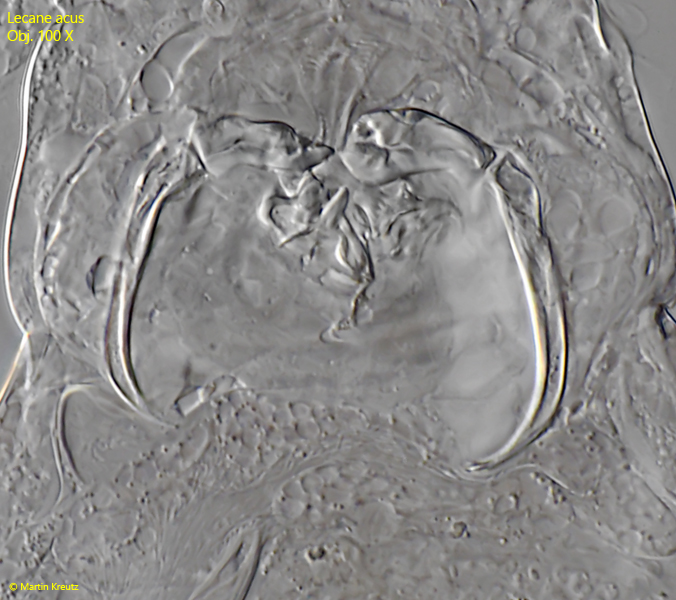
Fig. 4:Lecane acus. The trophi in a strongly squashed specimen. Obj. 100 X.