foot opening U-shaped with two bluntly pointed protuberances
foot long, partly curled, toes short
one eyespot (sometimes doubled)
planktonic lifestyle
Brachionus angularis
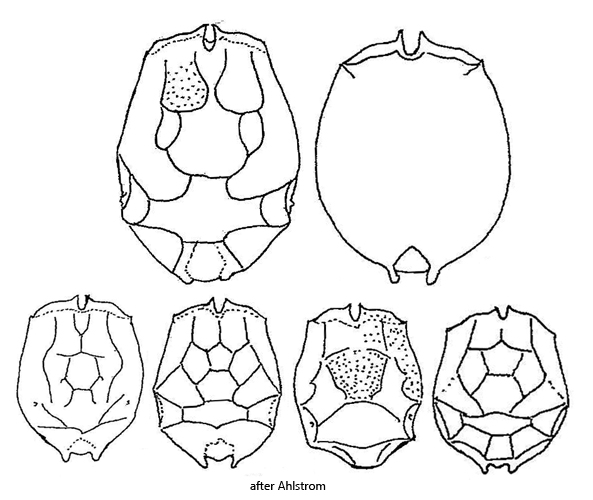
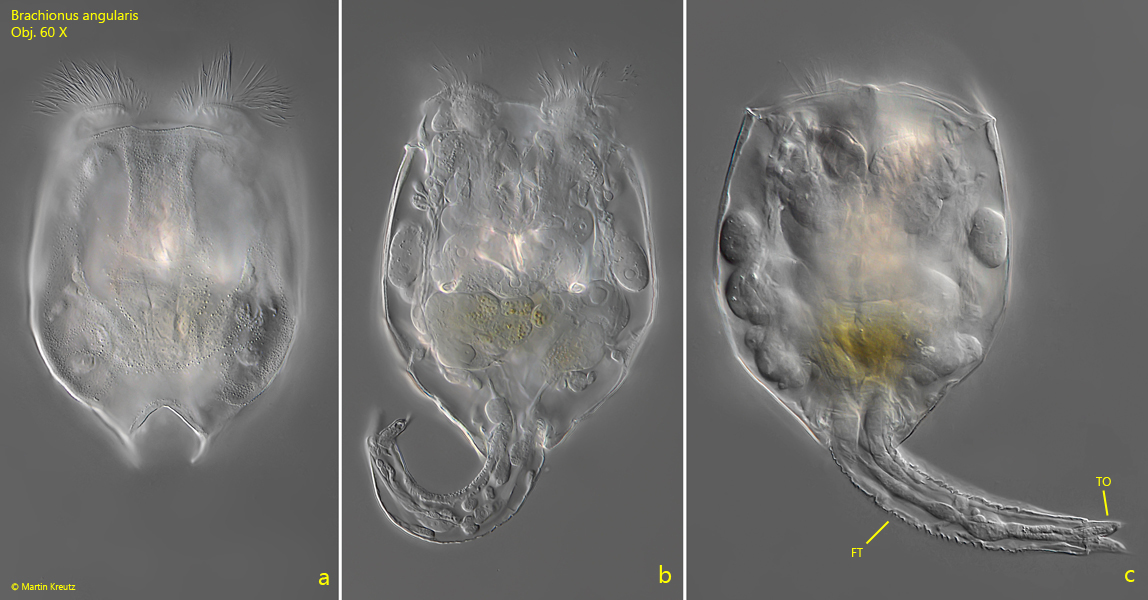
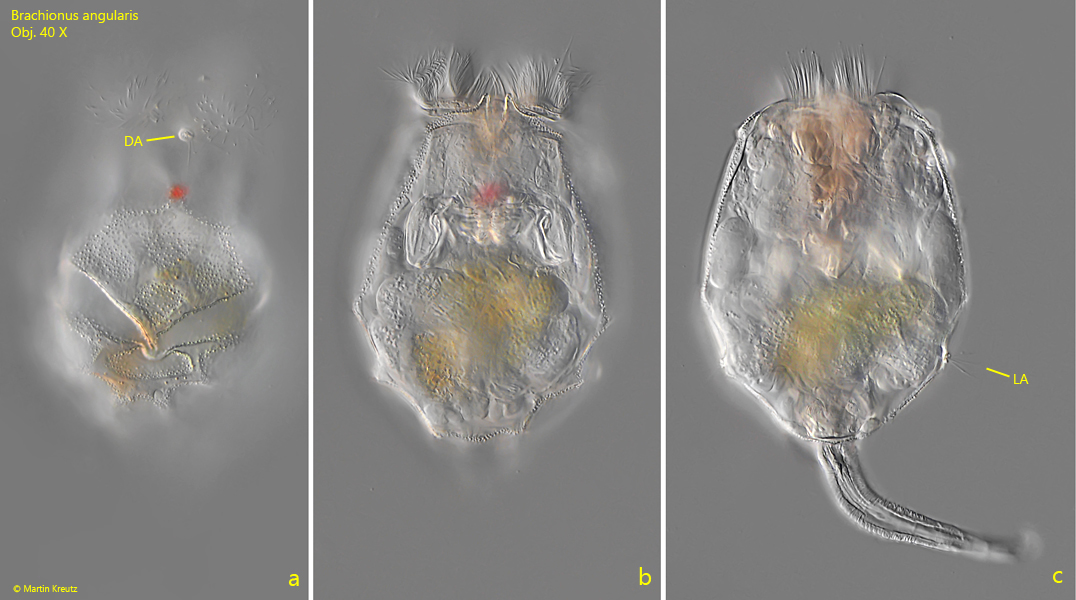
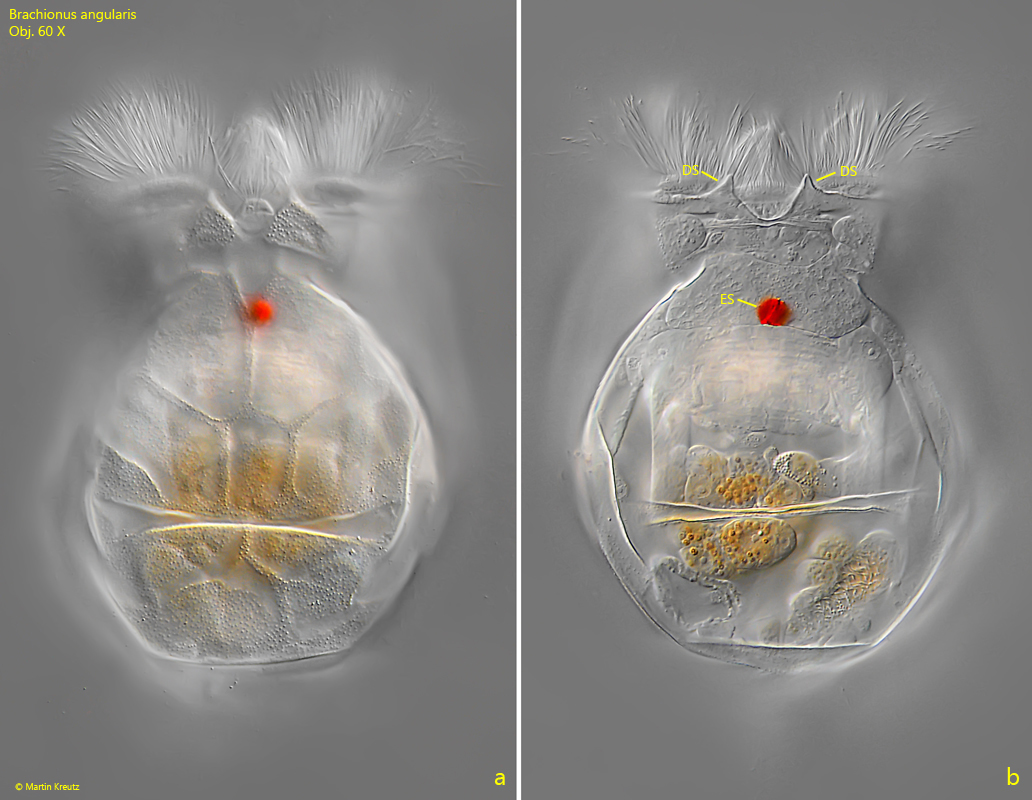
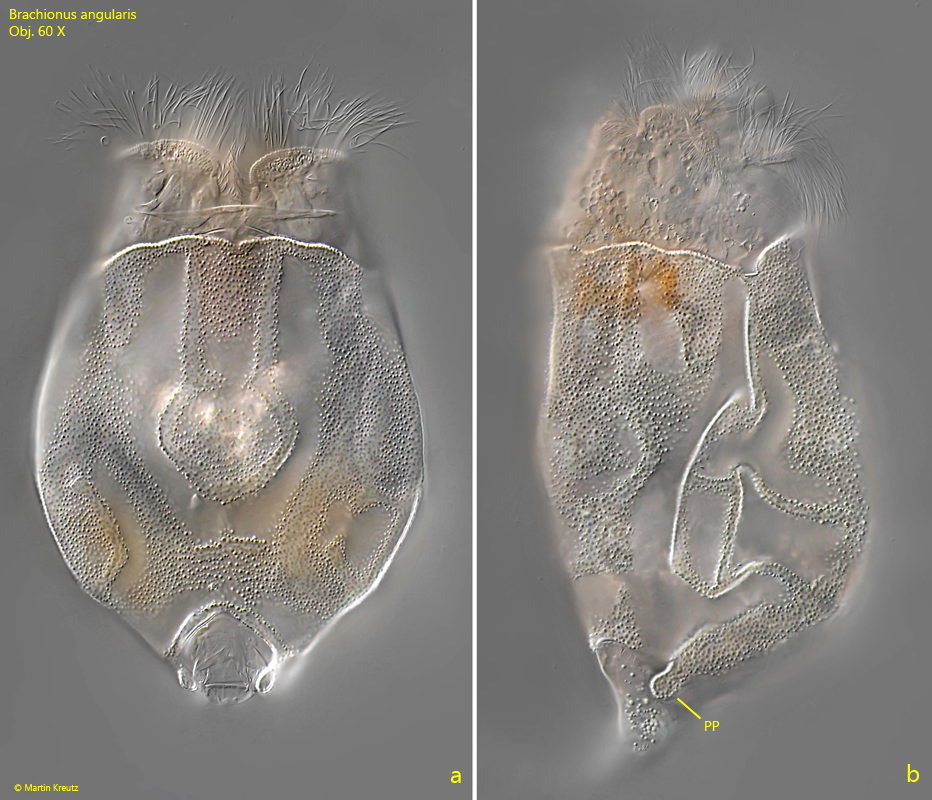
Brachionus angularis is a very common rotifer that I find with plankton in many of my sampling locations. The species has an almost oval lorica that, however, appears somewhat angular. In contrast to many other planktonic rotifers with a lorica, this species has no spines, with the exception of two small spines on the anterior margin on the dorsal side (s. fig. 3 b). The anterior margin on the ventral side is slightly wavy, without spines (s. fig. 4 a). The ventral side of the lorica is usually granulated. The dorsal side, on the other hand, is often faceted, though not always (s. fig. 3 a). In general, this species is very variable.
The foot is long and ringed (s. fig. 1 c). The toes have distinct, thin claws (hard to see). When swimming, the foot usually remains retracted. It is only extended for a short time under slight coverslip pressure.
Fig. 1 a-c:Brachionus angularis. L = 108 µm (without foot). A slightly squashed specimen from ventral. FT = foot, TO = toes. Obj. 60 X.
Fig. 2 a-c:Brachionus angularis. L = 115 µm (without foot). A second slightly squashed specimen from dorsal. DA = dorsal antenna, LA = lateral antenna. Obj. 40 X.
Fig. 3 a-b:Brachionus angularis. L = 108 µm (without foot). A slightly squashed specimen with a faceted lorica from dorsal. Note the two anterior spines (DS). ES = eyespot. Obj. 60 X.
Fig. 4 a-b:Brachionus angularis. L = 106 µm (without foot). A slightly squashed specimen from ventral (a) and from left. PP = posterior protuberances. Obj. 60 X.
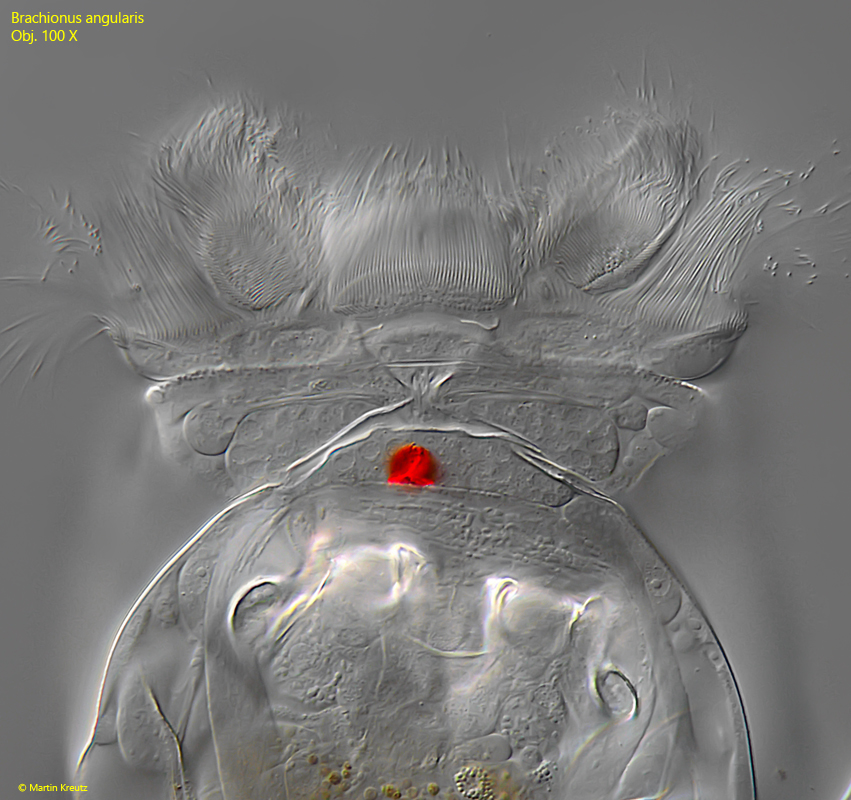
Fig. 5:Brachionus angularis. The corona from dorsal in detail. Obj. 100 X.