foot slender and long, sometimes thickened distal end
length 140–580 µm
in a gelatinous case
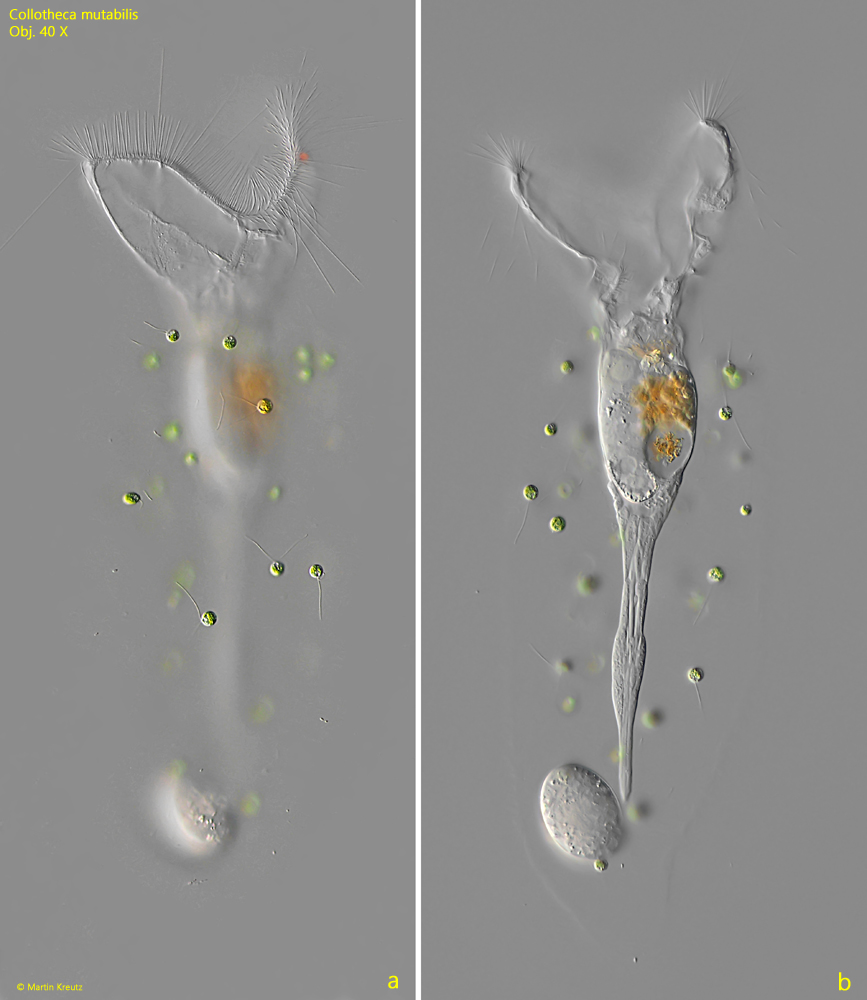
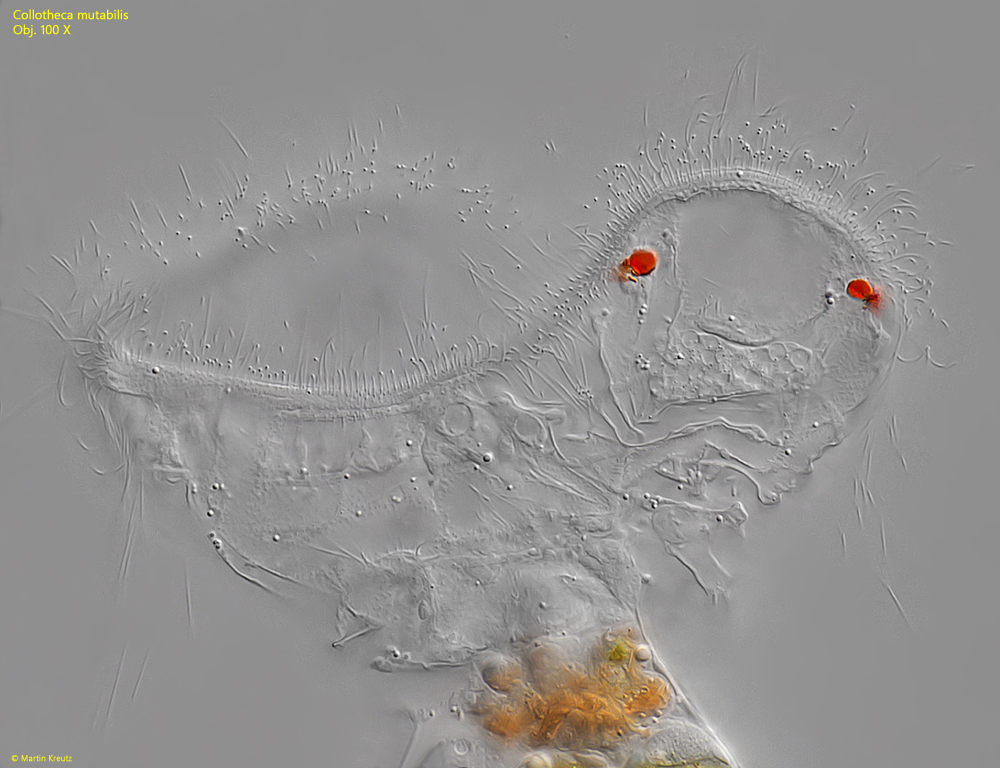
2 eyespots in dorsal lobe
free-swimming, planktonic lifestyle
Collotheca mutabilis
I have found Collotheca mutabilis only rarely in the plankton of Lake Constance and in the Ziegeleiweiher Rickelshause.
Collotheca mutabilis is a pelagic rotifer that lives in a self-made gelatinous case. The animals can withdraw completely into the case. The unfertilized, amictic eggs are deposited in the case. The corona is typical and consists of two lobes. There are two eyespots in the dorsal, larger lobe. This makes it easy to distinguish Collotheca mutabilis from the similar species Collotheca pelagica, which also lives pelagically, but has a circular corona with short cilia and without eyespots. In Collotheca mutabilis, the outward-facing cilia are considerably longer than the cilia on the inside of the lobes.
Fig. 1:Collotheca mutabilis. L = 270 µm. A freely swimming specimen found September 1998 in Lake Constance. Note the two lobes of the corona. Obj. 20 X.
Fig. 2:Collotheca mutabilis. L = 270 µm. The same specimen as shown in fig. 1 in detail. Note the gelatinous case (GC). Obj. 40 X.
Fig. 3 a-b:Collotheca mutabilis. L = 275 µm. Two focal planes of a second specimen found in August 2024 in Lake Constance. On the outside of the gelatinous case some algae with flagella have settled. Obj. 40 X.
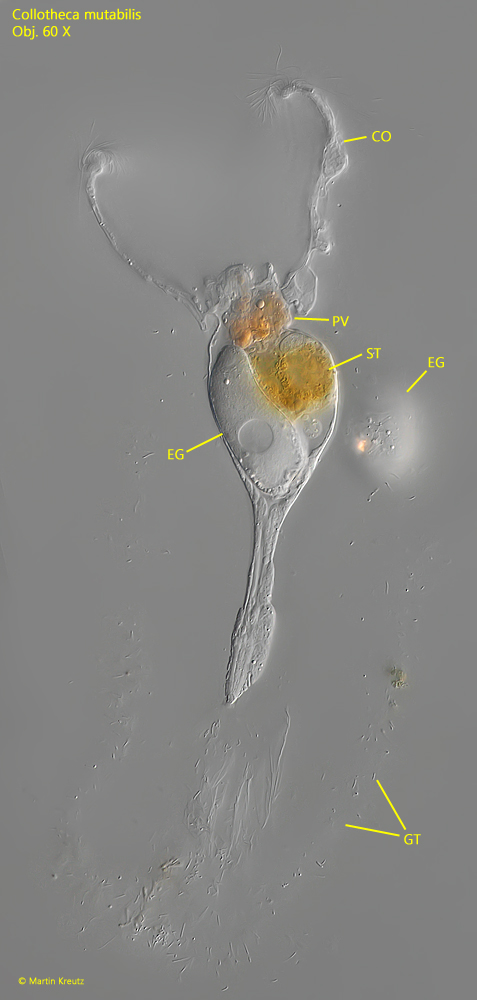
Fig. 4:Collotheca mutabilis. L = 283 µm. The third specimen with extended corona (CO). EG = egg, ST = stomach, PV = proventriculus. Obj. 60 X.
Fig. 5:Collotheca mutabilis. The two, large eyespots in the dorsal lobe of the corona. Obj. 100 X.
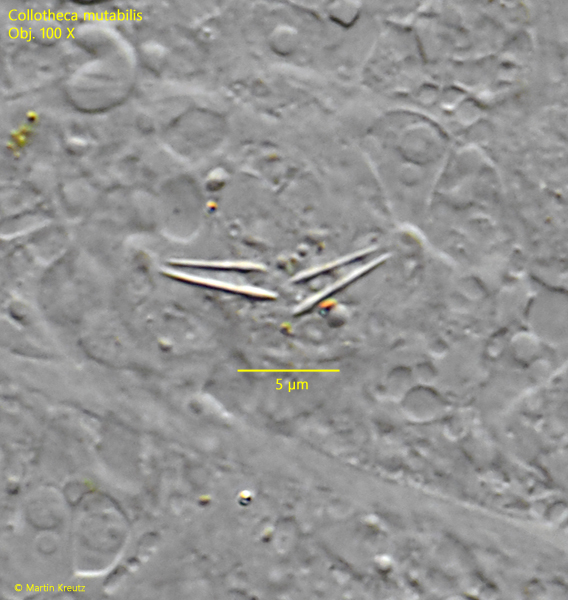
Fig. 6:Collotheca mutabilis. The very small trophi in a strongly squashed speciumen. Obj. 100 X.