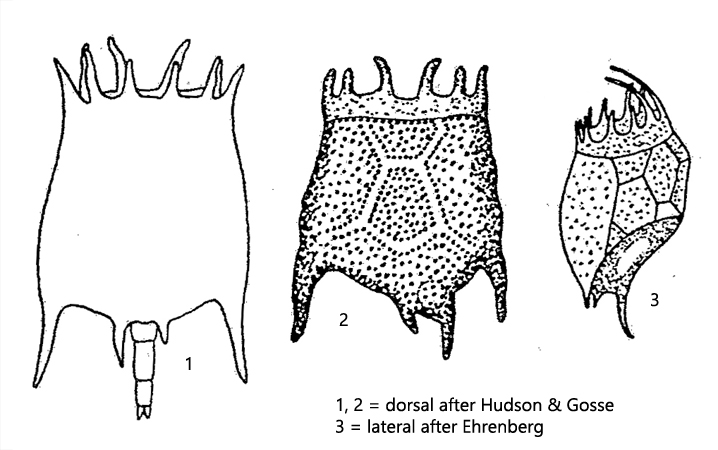
lorica almost rectangular, dorso-ventrally flattened
length 165–265 µm (with foot)
anterior end of lorica with 10 spines
posterior end of lorica with 4 spines
dorsal side of lorica fielded and granulated
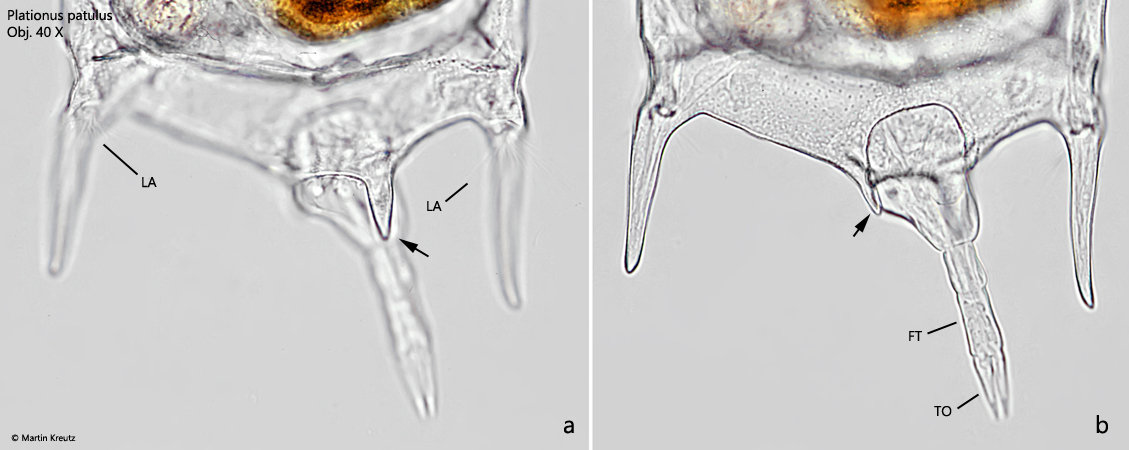
foot three-segmented
2 slender toes with pointed ends
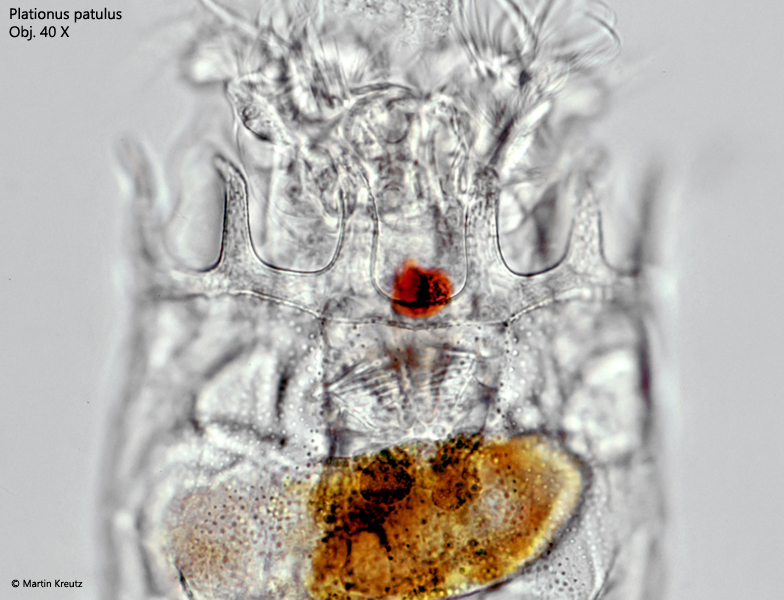
one eyespot
foot tube surronunded by short spines
Plationus patulus
I found Plationus patulus in 1996 and 2005 in the Simmlried and again in 2021 in a shallow pond on a flooded meadow. In my other collection sites, I was not able to detect this species and a after 2021, I have not found another specimen.
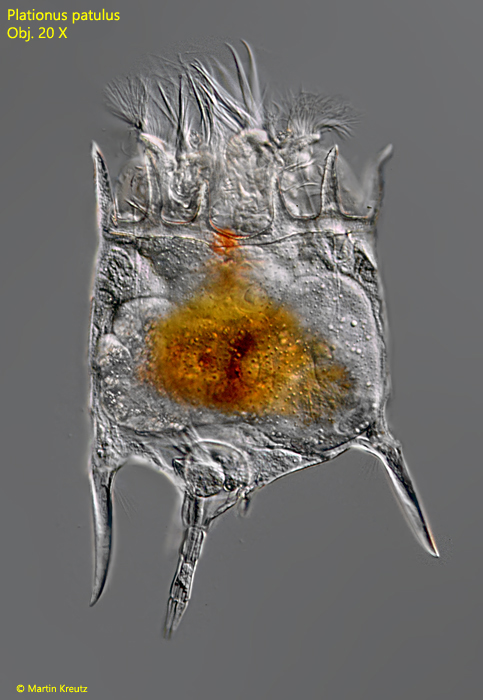
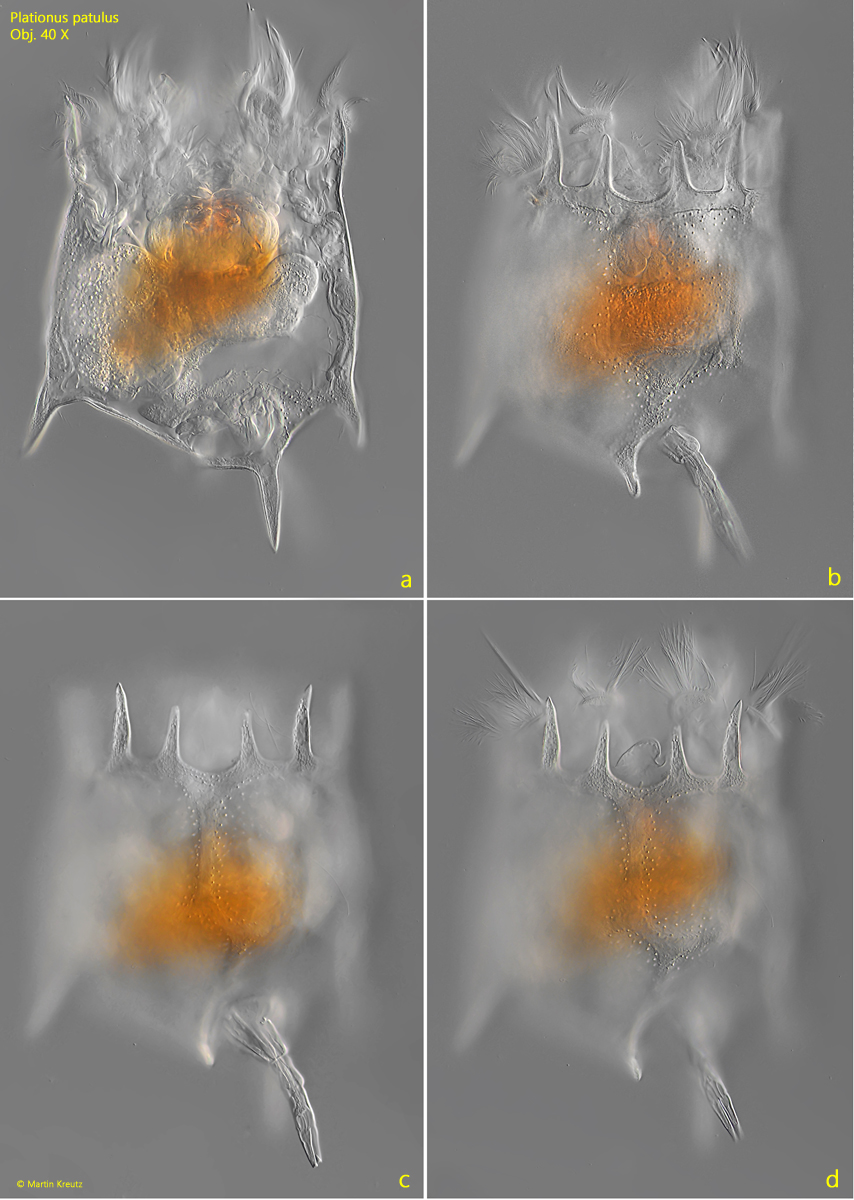
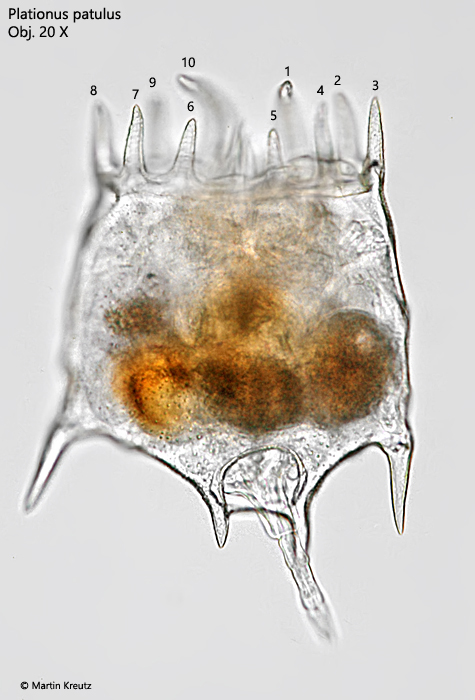
Plationus patulus is easily recognized by the 10 spines on the anterior margin of the lorica (s. fig. 3). Unlike species of the genus Brachionus, Plationus has a segmented foot rather than a ringed one (s. figs. 1 and 4 b).
Fig. 1:Plationus patulus. L = 288 µm (with foot). Ventral view of a slightly squashed specimen with a fully extended foot. Obj. 20 X.
Fig. 2 a-d:Plationus patulus. L = 272 µm (with foot). Ventral view of a second, slightly squashed specimen. Obj. 40 X.
Fig. 3:Plationus patulus. L = 275 µm (with foot). Ventral view of a slightly squashed specimen in brightfield illumination. Note the 10 spines at the anterior end of the lorica (1-10). Obj. 20 X.
Fig. 4 a-b:Plationus patulus. Two focal planes of the short spines surrounding the foot opening (arrows). FT = foot, LA = lateral antennae, TO = toes. Obj. 40 X.
Fig. 5:Plationus patulus. Ventral view with with the large red eyespot. Obj. 40 X.
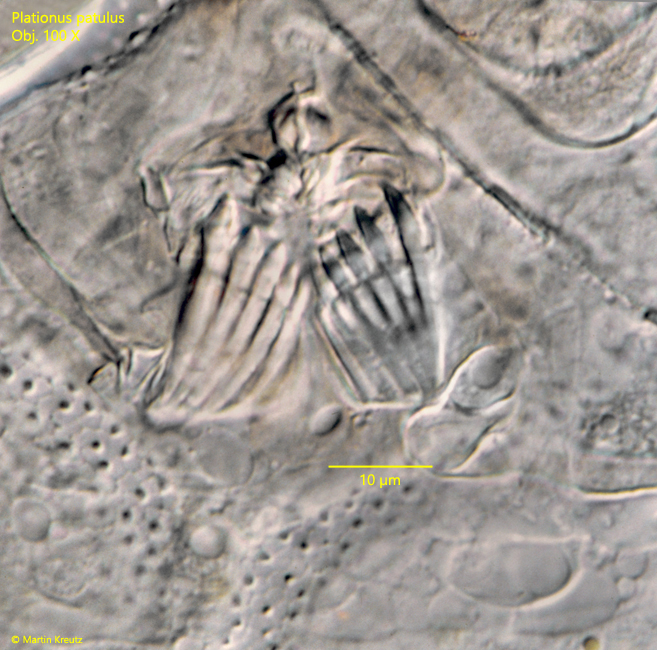
Fig. 6:Plationus patulus. The trophi in a strongly squashed specimen. Obj. 100 X.